

Is Algo Trading Profitable? What the Evidence Actually Says (2026)
Is algo trading profitable? It can be, but most retail traders lose money. What regulator and academic data show, why algos fail and how to test yours.
By Tessera Trades · Updated · 10 min read
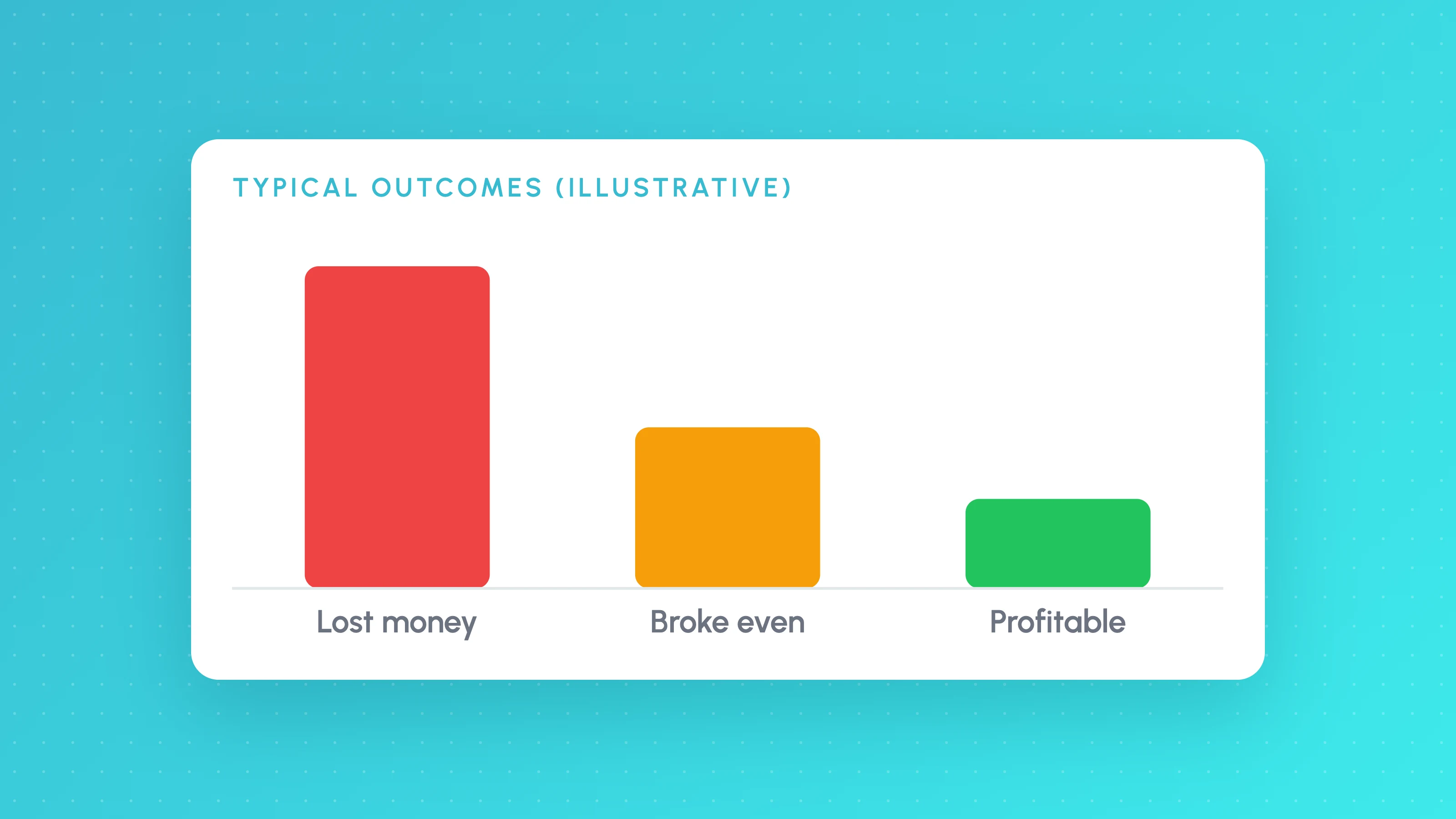
Algo trading can be profitable, but the evidence shows that most retail traders in short-term and leveraged markets lose money, and automating a strategy does not change that on its own. In the one regulator dataset that splits algo from non-algo trading (SEBI's, for Indian equity derivatives), the profits go mostly to large institutional algorithmic desks; for an individual trader, the only answer that counts is whether your own strategy has a positive expectancy after costs on enough trades to trust.
This guide covers what regulator and academic data say about retail outcomes, who does make money, whether algo trading beats manual trading, why most retail strategies fail, and how to check yours.
*Risk note: trading involves a substantial risk of loss. Nothing here suggests that any strategy, automated or not, will make money.*
What the data says about retail trader outcomes
There is good data on how retail short-term traders do, and it is consistent across countries and decades. Most of it does not separate traders who use algorithms from those who don't, so read it as the baseline any retail strategy starts from.
| Source | Market | Finding |
|---|---|---|
| SEBI study, FY25–FY26 (August 2026) | Indian equity derivatives | 87.7% of individual traders made net losses in FY26, down from 90.9% in FY25 |
| SEBI study, FY22–FY24 (September 2024) | Indian equity F&O | 93% of over 1 crore individual traders lost money over three years, including transaction costs |
| ESMA (March 2018) | Retail CFDs across the EU | 74–89% of retail accounts typically lost money, with average losses per client of €1,600 to €29,000 |
| Barber, Lee, Liu and Odean (Journal of Financial Markets, 2014) | Taiwanese day traders, 1992–2006 | Less than 1% of day traders could predictably and reliably earn positive abnormal returns net of fees |
| Chague, De-Losso and Giovannetti (working paper, 2019) | Brazilian equity futures, traders starting 2013–2015 | Of people who day traded for at least 300 days, 97% lost money and 0.4% earned more than a bank teller (about US$54 a day) |
Three things stand out. Loss rates are high everywhere the data exists. Experience does not reliably fix it: the Brazilian figure is about people who kept going for at least 300 days. And a small minority does profit consistently, which means the question is not "can it work?" but "what separates that minority from everyone else?"
We could not find a regulator dataset or peer-reviewed study that isolates retail traders who run their own algorithms, so any precise "percentage of algo traders who make money" you see quoted should be treated with suspicion unless it cites one.
Who actually makes money from algo trading
SEBI's FY25–FY26 study is the closest thing to public data on algo versus non-algo outcomes, and it shows where the profits go:
- Institutions, mostly. 99% of the gross profit of foreign portfolio investors and proprietary trading firms came from "algo entities", defined as any entity that placed at least one algorithmic order in the year.
- A few large ones. The top 10 proprietary traders, 2.3% of the category, earned about 74.5% of its ₹44,483 crore gross profit in FY26.
- Not individuals, even those flagged as algo. Only 15% of individual traders were classed as using algorithms in FY26, and SEBI says that overstates real algo use because broker auto square-offs carry the same flag. In SEBI's chart of FY25–FY26 gross P&L, individuals lost money in aggregate in both groups: roughly ₹52,000 crore for those classed as algo and ₹1.18 lakh crore for the rest.
SEBI also notes that derivatives trading is "largely a zero-sum activity before transaction costs", with individual losses broadly matched by institutional profits. The algorithmic desks that profit have advantages a retail algo does not get by being automated: lower costs per trade, faster execution, market-making revenue, more capital and full-time research teams.
Is algo trading more profitable than manual trading?
Not automatically. There is no good public evidence that a retail trader becomes more profitable by automating, and the SEBI figures above show individuals flagged as algo users still lost money in aggregate. What automation changes is how a strategy is executed and tested, not whether it has an edge.
| Automation helps with | Automation does not fix |
|---|---|
| Following rules exactly, without hesitation or revenge trades | A strategy with no edge after costs |
| Trading more markets or sessions than you could watch | Costs and slippage, which grow with trade count |
| Testing: a rule-based strategy can be backtested and measured | Overfitting to past data |
| Consistent records, so live results can be compared with the backtest | Edges that fade as markets change |
| Reacting faster to conditions you defined in advance | Bugs, which can repeat a mistake hundreds of times |
The fairest way to put it: algo trading makes a strategy measurable. If the strategy is good, automation can help you trade it consistently. If it is not, automation helps you lose money more consistently, and faster. Systematic vs discretionary trading compares the two approaches, including a hybrid where rules decide and you keep the final say.
Why most retail strategies fail
Costs and slippage
Small per-trade costs decide the outcome for strategies that trade often. In SEBI's FY26 data, 82.1% of individual traders lost money before transaction costs and 87.7% after, so costs alone turned a slice of small winners into losers. Costs took 35% of the gross losses of loss-makers, compared with 21% of the gross profits of profit-makers. A backtest that leaves out commission and realistic slippage is measuring a different strategy from the one you will trade. Our guide to slippage in algo trading covers how much to assume and how to measure it on live fills.
Overfitting
Most strategies are tuned until the backtest looks good, and the tuning is what makes it look good. Quantopian researchers studied 888 algorithmic strategies with at least six months of out-of-sample results (Wiecki et al., 2016) and found that the backtest Sharpe ratio had little value in predicting live performance (R² below 0.025). The more backtesting an author had done on a strategy, the larger the gap between backtest and out-of-sample results. The checks for this are in is my backtest overfit?
Edge decay
Even real patterns weaken once they are known and traded. McLean and Pontiff studied 97 published stock return predictors and found portfolio returns were 26% lower out of sample and 58% lower after publication (Journal of Finance, 2016). A strategy copied from a forum, a course or a popular indicator is competing with everyone else who copied it.
Too few trades to know
A strategy with 40 trades and a great profit factor can be a strategy with no edge that got lucky. Retail traders often go live, or give up, on samples too small to tell either way. See how many trades you need for a valid backtest for the maths.
It only works in some conditions
Many strategies have an edge in one session, volatility regime or set of symbols and lose in others. The overall result averages the two, and when the good conditions fade, the strategy looks broken without any obvious reason.
What profitable systematic traders do differently
There is no published study of what the profitable minority of retail algo traders have in common, so treat this as practice rather than evidence. These habits come up repeatedly among systematic traders and address the failure modes above:
- They budget costs first. Commission, spread and slippage are set to realistic values before anything else is judged.
- They keep data back. Rules are designed on one period and tested on another they did not look at.
- They count trades. No decision is made on a profit factor or win rate without the trade count behind it.
- They know where the edge lives. They split results by session, weekday, time of day, volatility and symbol, and test whether removing weak conditions helps on unseen data.
- They compare live with backtest. Live fills are checked against the backtest for the same period, so a gap is caught early.
- They decide in advance when to stop. A drawdown or expectancy threshold triggers a review, rather than hope.
How to build an algo trading strategy puts these habits in order, from the first idea to a paper test and a running bot.
How to tell if your algo strategy is profitable after costs
Four numbers answer most of the question. Calculate them on trades net of commission and slippage.
| Check | What to look for | Guide |
|---|---|---|
| Expectancy | Positive average profit per trade after costs, in currency or R | Trading expectancy |
| Profit factor | Above 1.0 after costs, with headroom; 1.3 to 2.0 is a common practitioner range, above 3 is a warning | What is a good profit factor? |
| Sample size | As a rule of thumb, 100+ trades overall and 30+ in any slice you act on | Backtest sample size |
| Out-of-sample and live | Results hold on a period the strategy was not tuned on, and live fills track the backtest | Backtest validation checklist |
Then split the results by market condition. A strategy with a profit factor of 1.2 overall might be 1.7 in one session and below 1.0 in another, and that changes what you should do next.
Tessera does this part for strategies you already run or have backtested. It imports TradingView Strategy Tester exports, MetaTrader 4 and 5, NinjaTrader, Tradovate and Hyperliquid files or a CSV, or syncs live trades from brokers such as Interactive Brokers, OANDA and Binance, then breaks results down by session, weekday, time of day, volatility and symbol with the trade count behind each slice. Its simulator replays stop, target and filter changes on real candles for the trades the strategy already took. It does not generate new backtest fills, place trades or tell you a strategy will be profitable.
What percentage of algo traders are profitable?
No reliable figure exists for retail traders running their own algorithms; no regulator or academic study we found separates them out. Some do make money, but the broader data points the other way for most retail traders: 87.7% of individual Indian equity derivatives traders lost money in FY26 according to SEBI, and 74–89% of retail CFD accounts lost money in ESMA's 2018 review. No study we found isolates retail traders running their own algorithms.
For your own strategy, there is no honest typical profit percentage. What a strategy makes is roughly its expectancy per trade after costs, multiplied by the number of trades, at the position size you use, and the variation around that can be large.
Expected profit per period = Expectancy per trade (after costs) x Trades per periodAs an illustration only: a strategy with an expectancy of $12 per trade after costs that takes 20 trades a month would average $240 a month before any drawdown, and could still lose money in many individual months. Raising size raises both the average and the swings. If expectancy is zero or negative after costs, no amount of size or trade frequency makes the result positive. You can work out your own with the free expectancy calculator, or stress-test the range of outcomes with the Monte Carlo trading simulator. Be wary of anyone quoting monthly returns for algo trading in general; they are describing one strategy, period and account, if anything real at all.
Frequently asked questions
- Is algo trading profitable for retail traders?
- It can be for some, but most retail short-term traders lose money, and the available data doesn't show automation changing that. SEBI found 87.7% of individual Indian equity derivatives traders lost money in FY26, and individuals classed as algo users lost money in aggregate too. Whether your strategy is profitable is something you can measure, using expectancy and profit factor after costs on enough trades.
- What percentage of algo traders make money?
- No regulator or peer-reviewed study we found isolates retail traders running their own algorithms, so there is no reliable figure. Broader studies of retail short-term traders find most lose: 74–89% of retail CFD accounts in ESMA's 2018 review, and less than 1% of Taiwanese day traders predictably profitable in Barber and colleagues' study.
- Is algo trading better than manual trading for beginners?
- Automation helps with discipline and makes a strategy testable, which is useful for a beginner. It also lets a beginner's mistakes, such as missing costs or an overfit rule, repeat quickly. Start by testing a simple strategy with realistic costs and small size, and judge it on the trades it actually takes.
- Can you make a living from algo trading?
- A small minority does, but the evidence is discouraging for most people who try. In the Brazilian futures study, 0.4% of people who day traded for at least 300 days earned more than a bank teller's daily pay. Treat any income goal as a separate question from whether a strategy has an edge at all.
- Do trading bots make money?
- Some may, but a profitable backtest or a screenshot is not evidence. A bot is only as good as the strategy inside it, after costs, slippage and live fills. Judge a bot on its own live trade record over enough trades, not on its backtest or marketing. Our guide to whether AI trading bots work looks at published live results.
- How do I know if my algo strategy has an edge?
- Check that expectancy is positive after costs, the profit factor has headroom above 1.0, there are at least about 100 trades, and the result holds on data the strategy was not tuned on. Then split the trades by session, weekday and volatility to see where the edge comes from and where it leaks. To see where your own strategy makes and loses money, run your trades from a synced broker, a platform export or any spreadsheet through the free Entry Analysis report, with no card needed.
Keep reading
 Trading metrics
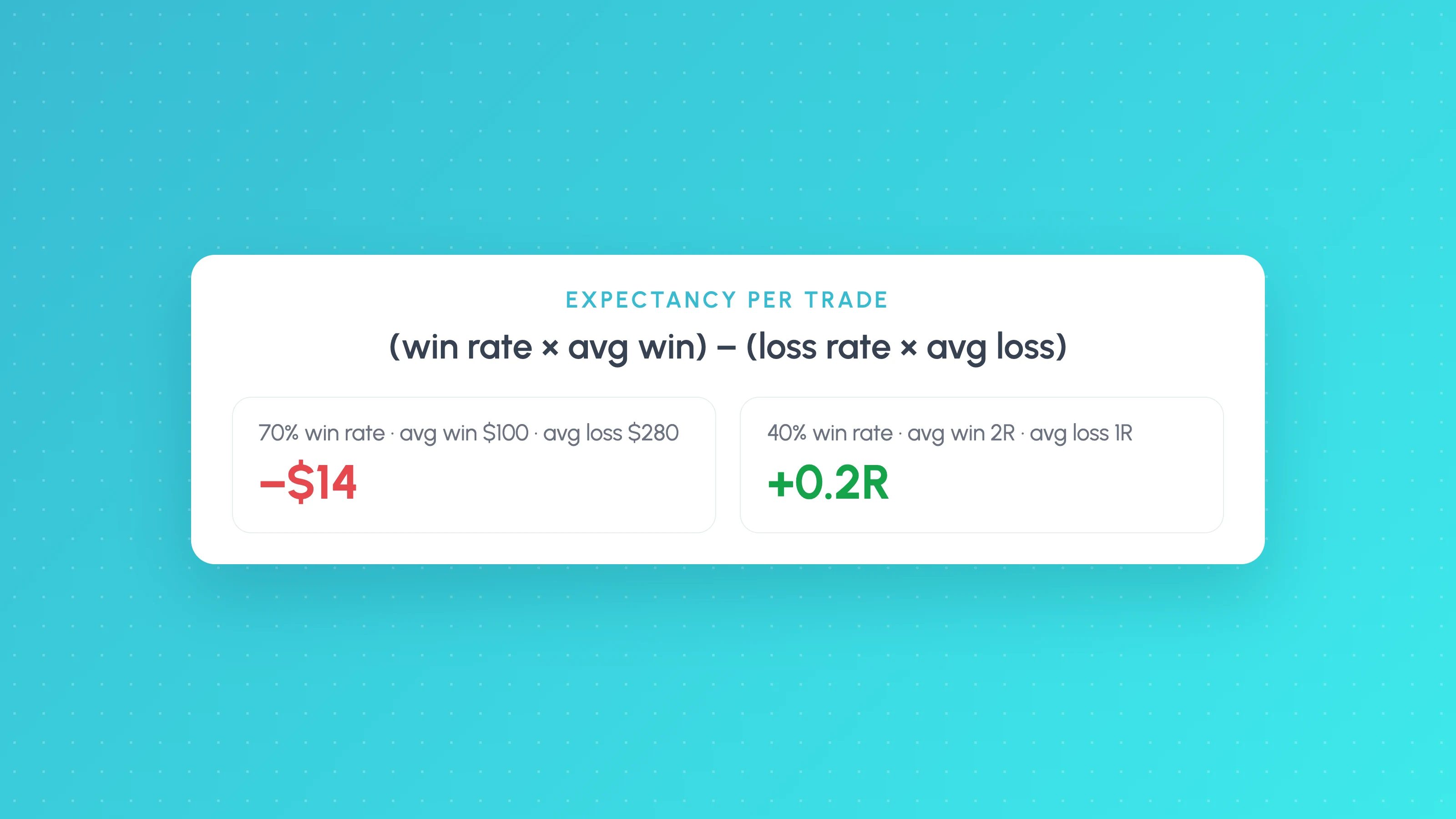
Trading Expectancy Formula: In Currency and R, With Examples
Expectancy = win rate x average win minus loss rate x average loss. Worked examples in currency and R, why 70% win rates lose, and spreadsheet formulas.
 TradingView backtests
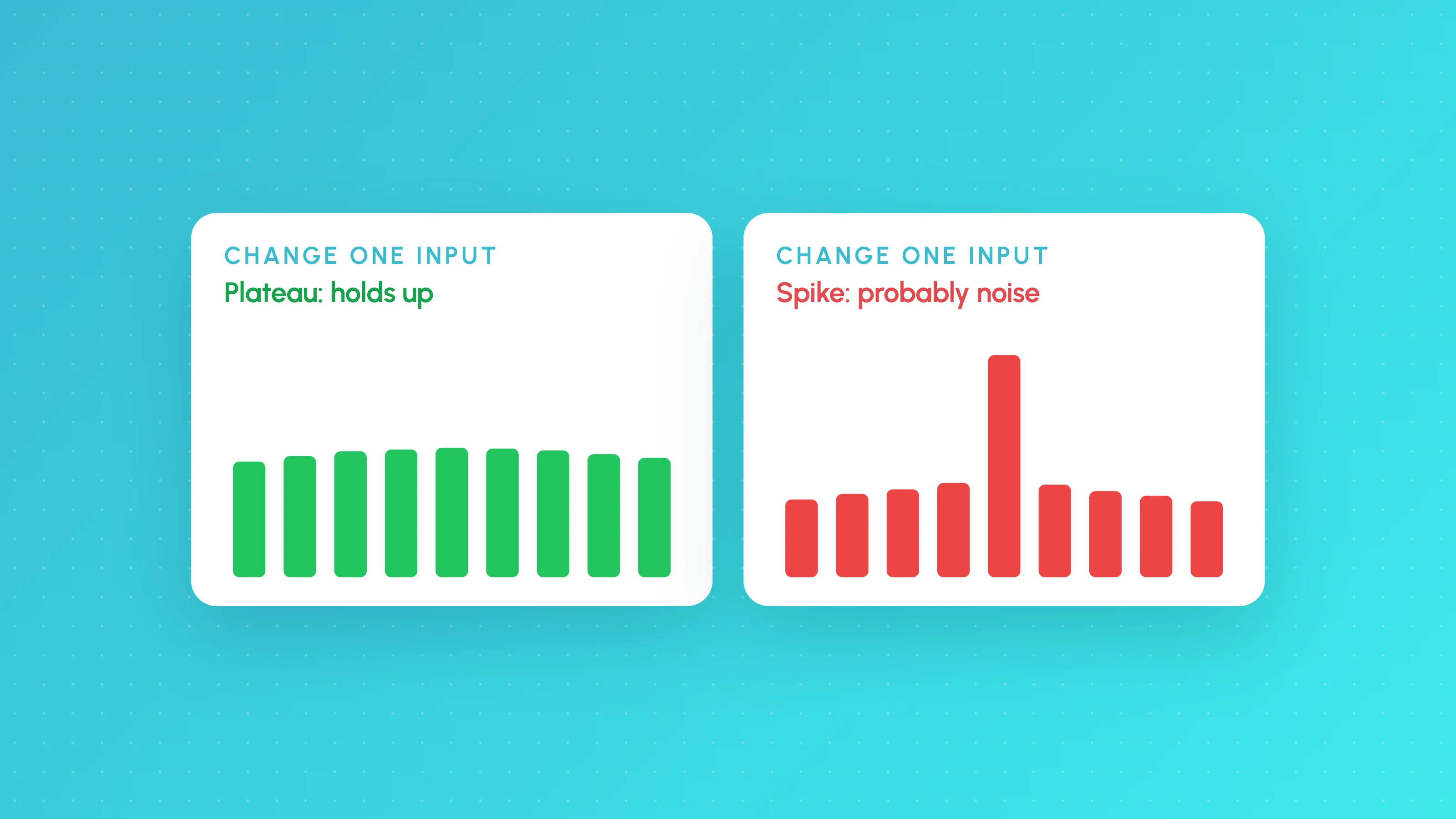
Is My Backtest Overfit? A Practical Checklist for Traders
How to tell if a backtest is overfit: too-good metrics, thin samples, fragile inputs, useless filters, out-of-sample and walk-forward tests, plus a checklist.
 TradingView backtests
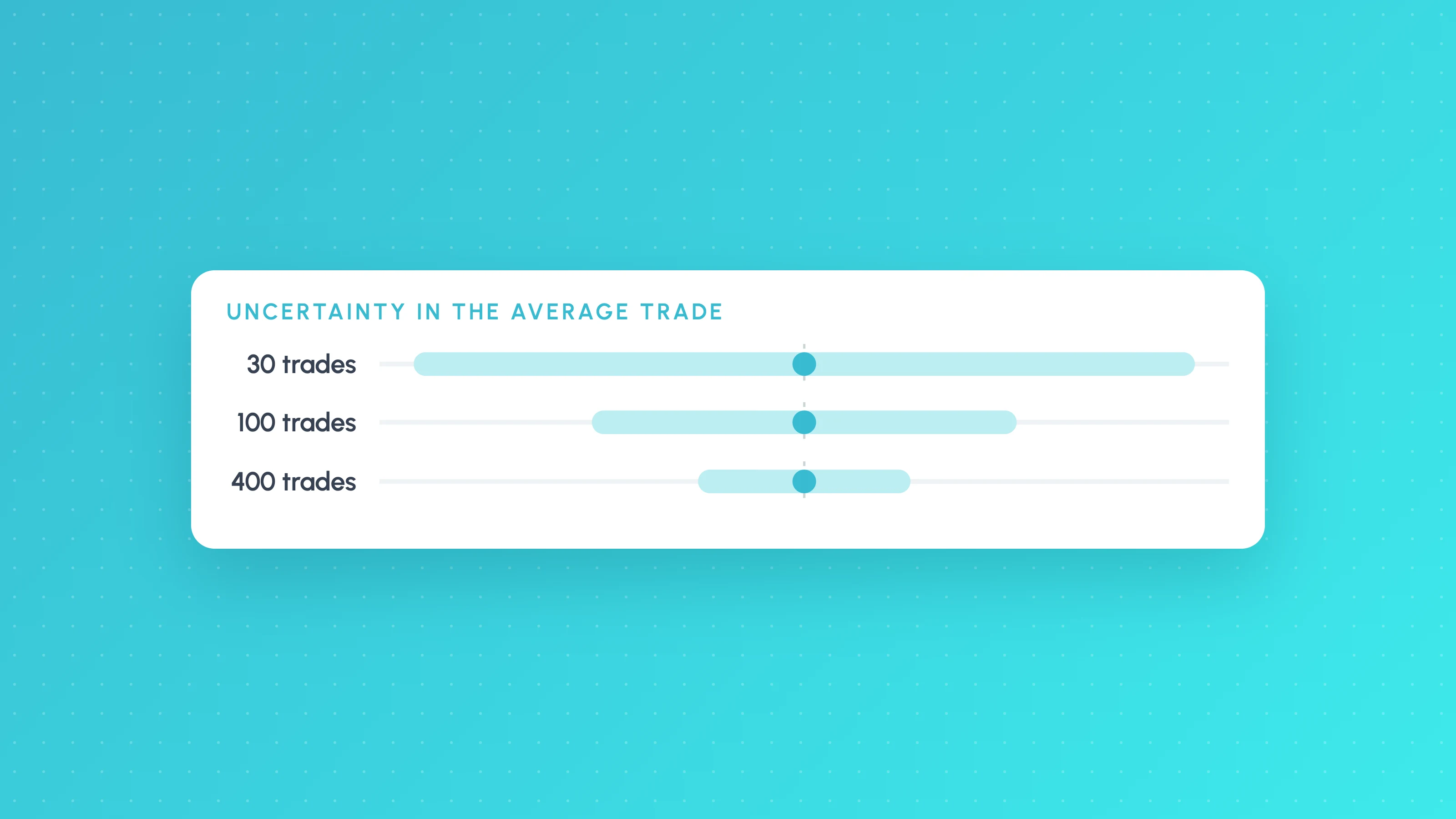
How Many Trades Do You Need for a Valid Backtest?
How many trades a backtest needs: rules of thumb, the t-statistic formula with a worked example, a table by edge size, per-bucket minimums and multiple testing.