

Systematic vs Discretionary Trading: Which Suits You, and the Hybrid Path
Systematic vs discretionary trading compared: speed, testing, emotion and flexibility, how to turn your playbook into testable rules, and the hybrid path.
By Tessera Trades · Updated · 8 min read
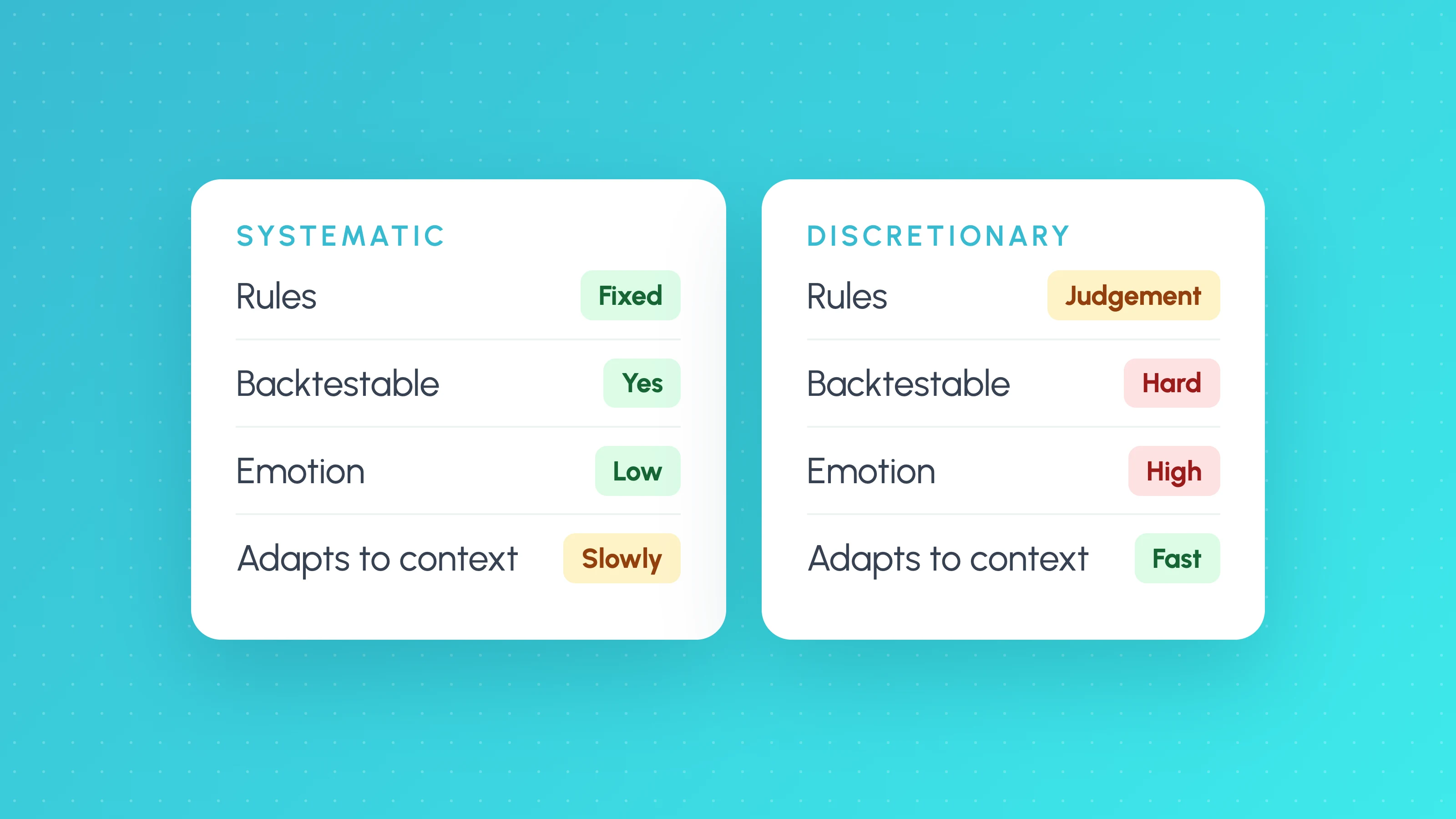
Systematic trading follows fixed rules that decide every entry, exit and position size, so the same chart always gives the same trade and the strategy can be backtested. Discretionary trading leaves the final decision to the trader's judgement in the moment. Neither is more profitable by default: systematic trading is easier to test and repeat, discretionary trading adapts more easily, and many traders do best with a hybrid where rules generate the trades and the trader keeps the final say.
The useful question is not which is better, but which suits how you think, how much time you have, and what you can actually test. This guide compares the two, shows how to turn a discretionary playbook into rule based trading, and explains the hybrid path.
Neither approach guarantees profit, and most retail traders lose money whichever they use. Backtests are not future results, and leveraged forex and CFD trading carries a high risk of loss.
Systematic vs discretionary trading compared
| Systematic (rule-based) | Discretionary | |
|---|---|---|
| Who decides | The rules | You, in the moment |
| Same chart, same trade? | Always | Not necessarily |
| Can it be backtested? | Yes, precisely | Only roughly, and memory is biased |
| Can it be automated? | Yes | No, though parts can be |
| Adapts to unusual conditions | Only if a rule covers it | Yes, if your judgement is good |
| Emotional pressure | Lower during trades, high when you want to override | High on every trade |
| Time needed | Heavy up front, lighter day to day | Screen time every session |
| Main risk | Overfitting the rules to past data | Inconsistency, and not knowing what your edge is |
| How you improve | Change a rule, re-test | Review trades, rely on experience |
What systematic trading actually means
Systematic trading strategies have rules complete enough that a computer could run them. That means a defined market and timeframe, an entry condition, any filters, the stop, the target or exit, the size and the hours. "Buy the first 15-minute candle that closes above the London opening range high, stop below the range low, target 1.5R, risk 0.5%" is systematic. "Buy London breakouts that look clean" is not.
Systematic does not have to mean automated. Plenty of systematic traders place every order by hand. What makes it systematic is that the decision is already made by the rules before the candle closes.
The big advantage is that you can measure it. You can backtest the exact rules over years of data, count the trades, work out the expectancy after costs and check it on data it was not built on. The big danger is that measurement makes it easy to keep adjusting rules until the past looks perfect, which is overfitting. Is my backtest overfit covers how to spot it.
What discretionary trading actually means
Discretionary traders read context: how price reacted at a level, the news backdrop, how the session is unfolding. Good ones are not random; they have a playbook of setups they recognise. But the final call is a judgement, and it can vary with mood, fatigue and recent results.
Its advantage is flexibility. A discretionary trader can skip a setup on a day that feels wrong, and sometimes that judgement is genuinely valuable. Its weakness is that you cannot easily tell whether it is. Without exact rules, you cannot backtest your edge, and a trading journal records the trades you took, not the ones you saw and skipped.
Algo trading vs manual trading: the same question?
Not quite. Algo trading vs manual trading is about who places the order. Systematic vs discretionary is about who makes the decision. You can be:
- Systematic and automated: rules decide, a bot places the order.
- Systematic and manual: rules decide, you place the order.
- Discretionary and manual: you decide and place the order.
- Hybrid: rules generate the signal, you approve or reject it, and the order is placed for you.
Being systematic is the step that matters. Automation only means the rules run without you at the screen. Is algo trading profitable looks at whether automation changes outcomes, and the short answer is that it does not on its own.
Which suits you?
Systematic trading tends to suit you if:
- You want to know whether your edge exists before risking money on it.
- You cannot watch the screen every session.
- You notice that your results swing with your mood or recent losses.
- You enjoy building, testing and refining more than reacting.
Discretionary trading tends to suit you if:
- You have a long, journalled record that shows your judgement adds value.
- You trade conditions that are hard to define, such as news reactions.
- You are at the screen anyway and enjoy reading price live.
If you recognise yourself in both lists, you are a good candidate for the hybrid path.
How to turn a discretionary playbook into testable rules
Most discretionary traders already follow more rules than they realise. The work is writing them down precisely enough to test.
- Pick your best setup. Choose one setup you trade often and trust, not your whole playbook.
- Write what you look for, then ask "how would I measure that?" "Strong trend" becomes "price above the 50 EMA and the 50 EMA rising over the last 10 candles". "Liquidity grab" becomes "price trades below the prior day's low, then closes back above it".
- Define the stop, target and size. Most discretionary traders are vague here. Pick one: stop below the swing low with a 2-pip buffer, target 2R, risk 0.5%.
- Set the hours. Only trade the session you actually trade.
- Backtest the rules with costs. You need enough trades to judge; see backtest sample size.
- Compare with your journal. Look at the trades the rules took and the ones you took. Where they differ is where your discretion is.
That last step is the most revealing. A hypothetical example: over the same 6 months, your rules take 120 trades with an average of 0.12R after costs. You took 70 of those signals by hand and skipped 50. If the 70 you took averaged 0.20R and the 50 you skipped averaged 0.00R, your discretion is adding value: you skipped the weaker trades. If the 70 you took averaged 0.08R and the skipped 50 averaged 0.18R, your judgement is costing you, and you would have done better following the rules.
Run this comparison honestly and you have something most discretionary traders never get: evidence about whether your judgement helps. The guide to building an algo trading strategy takes the rules from here through validation and paper trading.
The hybrid path: rules decide, you keep the final say
The hybrid approach separates the two jobs. The rules find and size the trade, which you have tested. You keep a veto, which you use sparingly and for reasons you write down.
To keep it honest:
- Only veto, do not add. You can reject a signal, but you do not take trades the rules did not give.
- Log every veto with a reason. "High-impact news in 10 minutes" is a reason. "Felt wrong" is worth logging too, so you can test it later.
- Review the vetoes. After 50 or so, compare the vetoed trades with the ones you took. If vetoes would have made money, your filter is costing you.
- Turn good vetoes into rules. If you keep skipping trades near news and those trades really do worse, make that a filter and test it.
Over time, a hybrid trader moves the useful parts of their judgement into the rules, and drops the parts that were not helping.
Test your playbook in Strategy Lab, keep the final say with Copilot
Tessera's Strategy Lab is built for the playbook-to-rules step, without code. You can describe your setup to TES, the AI strategy coach, in your own words and attach up to 2 chart screenshots of examples, and it builds the rules and runs the backtest. Or build it in the recipe composer, which covers setups discretionary traders often use, including ICT concepts such as fair value gaps, order blocks and liquidity sweeps, prior day and week highs and lows, opening ranges and divergences, with sessions and killzones as filters. A plain-English "If/Then" readout shows how your rules are being read, so you can check they match what you meant.
Every backtest includes costs and validation: an unseen period with a verdict, first half versus second half, the last 12 months and a multiple-testing warning. TES can also explain individual trades, which helps when comparing the rules' trades with your own.
For the hybrid path, Launchpad has a Copilot mode. The strategy runs on live prices and each signal comes to you, in the app or by Telegram with a chart, and you approve or reject it. Approvals do not go stale, and the order is placed on cTrader or Liquid Brokers with the stop and target attached, inside the risk limits you set. Closed trades go to the trade log, where you can review them and feed what you learn into the next version. Launchpad is on paid plans; see pricing.
Frequently asked questions
- What is the difference between systematic and discretionary trading?
- Systematic trading follows fixed rules that decide every entry, exit and size, so it can be backtested and automated. Discretionary trading leaves the final decision to the trader's judgement in the moment. Systematic is about who makes the decision, not whether a bot places the order.
- Is systematic trading better than discretionary trading?
- Neither is better by default. Systematic trading is easier to test, repeat and improve, while discretionary trading can adapt to conditions rules do not cover. The deciding factor is whether you can show your approach has an edge after costs, and that is far easier to show with rules.
- Can a discretionary trader become systematic?
- Yes. Start with your best single setup, define each part in measurable terms, backtest it with costs, and compare the rules' trades with your journal. You do not have to give up judgement entirely; a hybrid where you can veto signals is a common middle step.
- What is rule based trading?
- Rule based trading means every trading decision follows written rules that leave no room for interpretation: market, timeframe, entry, filters, stop, target, size and hours. Because the rules are exact, the strategy can be backtested and, if you choose, automated.
- Do systematic traders override their system?
- Some do, but every override changes the strategy you tested. If you override, log each one with a reason and review them later, so you can see whether your overrides help or hurt and turn the useful ones into rules.
Keep reading
 Algo trading
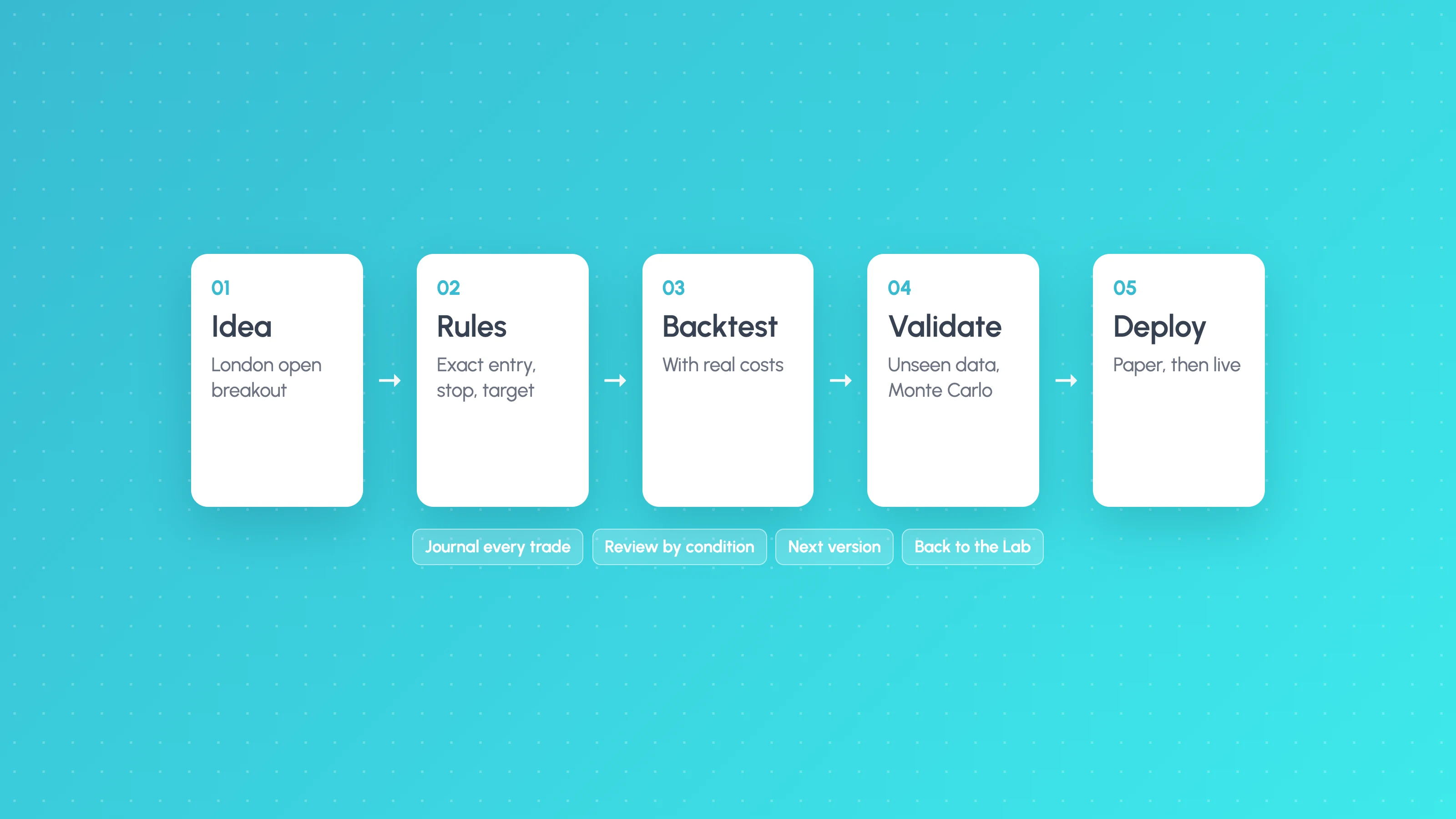
How to Build an Algo Trading Strategy: From Idea to Rules to Running Bot
How to build an algo trading strategy: turn an idea into exact rules, backtest with costs, validate, paper trade, deploy with limits, then review and improve.
 Algo trading
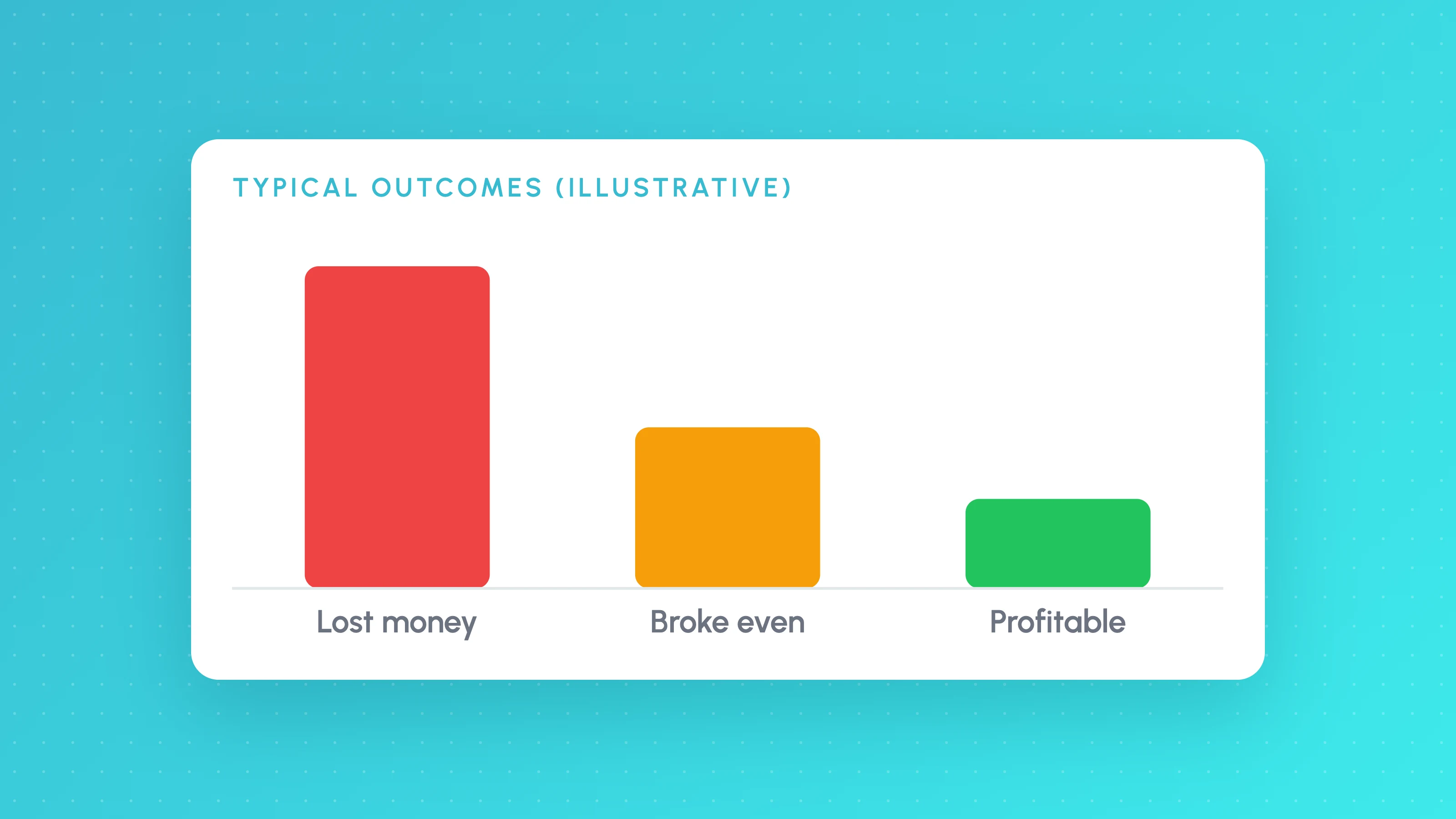
Is Algo Trading Profitable? What the Evidence Actually Says (2026)
Is algo trading profitable? It can be, but most retail traders lose money. What regulator and academic data show, why algos fail and how to test yours.
 Trading metrics
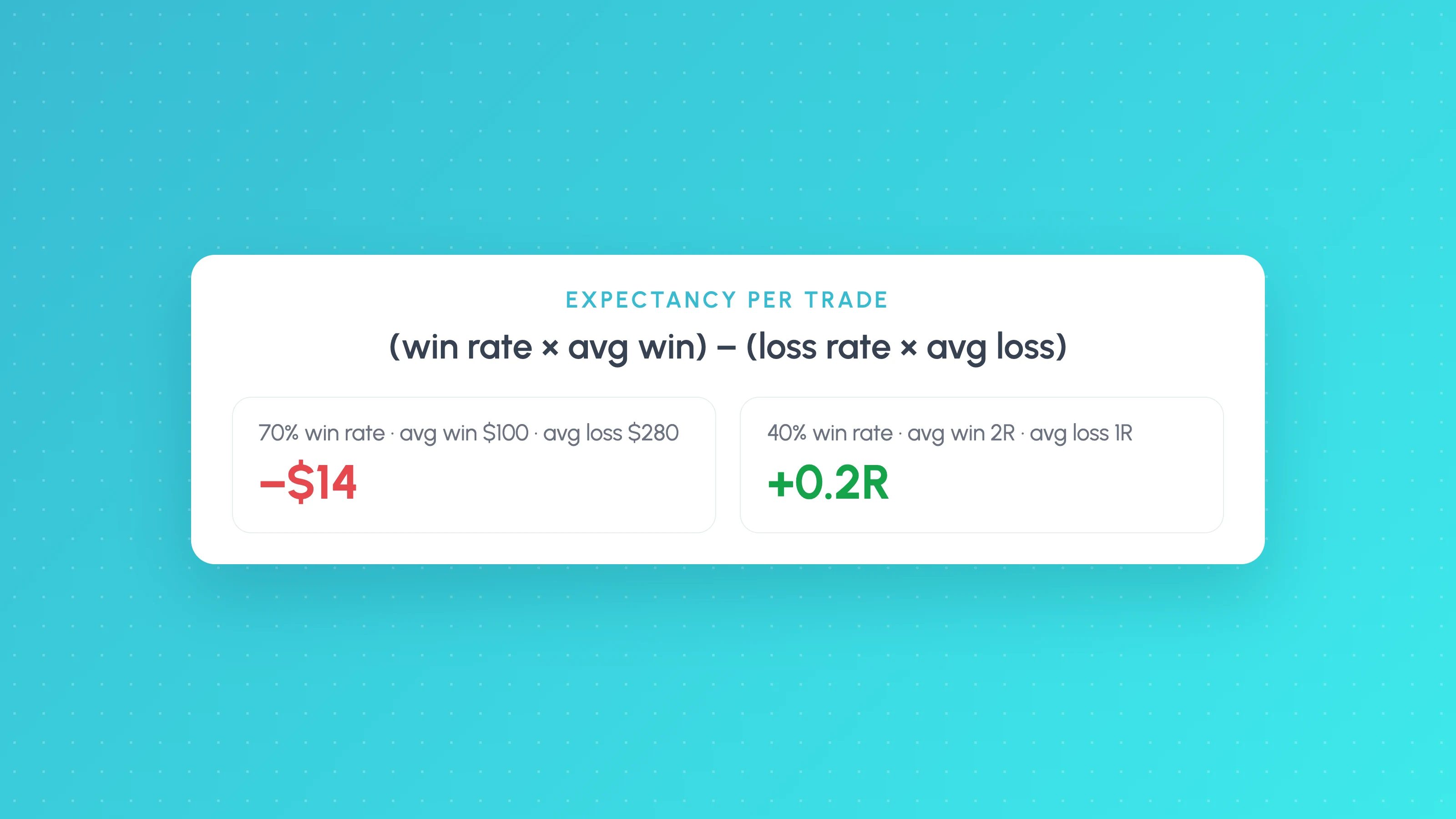
Trading Expectancy Formula: In Currency and R, With Examples
Expectancy = win rate x average win minus loss rate x average loss. Worked examples in currency and R, why 70% win rates lose, and spreadsheet formulas.