Edgewonk alternative
Edgewonk Alternative: Filter Entries, Not Just Exits
Edgewonk varies exits on the trades you took. Tessera does that too, filters which entries qualify, and exports the surviving rule to TradingView as Pine.
Read comparisonTraderSync brings Cypher AI, mobile apps and 700 plus brokers. Tessera ends every review with a report, a simulation, a policy or Pine you can forward test.
The best TraderSync alternative depends on what you want from a review. If you want an AI coach, mobile logging and the widest broker list, stay with TraderSync. If you want every session to end in a rule you can test and export to TradingView, Tessera is built for it, from $19 a month.
TraderSync is a data heavy journal with broad coverage: 700 plus brokers and exchanges, iOS and Android apps, market replay, and Cypher AI for conversational analysis of your history. Tessera is a performance lab on your closed trades. You get the journal stack you expect, plus computed reports, a counterfactual simulator, Trade Review to chart your fills, and policies you can push to TradingView as Pine. If a broker is missing from the native list, Custom CSV lets you map once and reuse the template.
| TraderSync | Tessera | |
|---|---|---|
| Best at | Cypher AI, mobile logging, 700 plus brokers, granular replay | Reports, simulator, policy, TradingView Pine on closed trades |
| Journal and stats | Deep analytics, flexible notes and tags | Full journal stack (log, notes, statistics, charts) |
| AI | Cypher answers questions in chat, capped by daily message limits | TES writes a narrative from prepared report statistics |
| What you leave with | An answer in a chat thread | A report, a simulation result, a policy or a Pine script |
| Entry price | $29.95 a month (Pro) | $19 a month (Standard) |
| Free trial | 7 days, all plans, no card | None on self serve access |
| Mobile | Native iOS and Android | Web app |
| Choose when | You want a coach and apps on the go | You want each finding to end in something testable |
In plain English: Cypher answers questions about your history in chat. Tessera shows you the numbers on trades you already took, then lets you test a rule change, one at a time, and walk away with a report, a simulation, a policy or Pine.
TraderSync pricing and features below are indicative as of September 2026, taken from public product and pricing pages. Confirm on TraderSync's site before you buy.

TraderSync's strengths are breadth and AI. Broker and exchange coverage runs past 700 platforms, which is the widest published list in the category and the single strongest reason to choose it. Native iOS and Android apps make capture easy away from the desk. Market replay lets you reload a past session and step through it, with playback fidelity improving by plan, from one minute steps on Pro through one second on Premium to 250 millisecond updates with Level II depth and time and sales on Elite. Cypher answers questions about your trading history in chat, with proactive Coach behaviour on Elite.
A seven day free trial across all plans, with no card required, makes it easy to evaluate before you commit. If coaching chat, tape reading and mobile capture are how you improve, that is a fair reason to choose them.
The common triggers:
The good parts sit above the entry plan. Pro at $29.95 a month is the working journal. Cypher is capped at roughly five messages a day there, replay is coarse, and the Evaluator and Simulator arrive on Premium at $49.95. Elite is $79.95.
AI you cannot use freely. Daily message caps mean the assistant is metered rather than available.
Chat answers do not carry forward. Cypher can tell you a session is weak. It does not hand you a tested rule.
You want to test a rule on trades you already took, one change at a time, rather than place hypothetical trades on historical charts.
You write TradingView Pine and want a bridge from live fills back into script rules.
Sales are final after the trial. There is no post purchase refund window, so the seven days is the whole evaluation period.
The workspace is dense. Imports, reports, tags, AI and replay in one screen suits power users and can feel crowded if you mainly want to review today's trades.
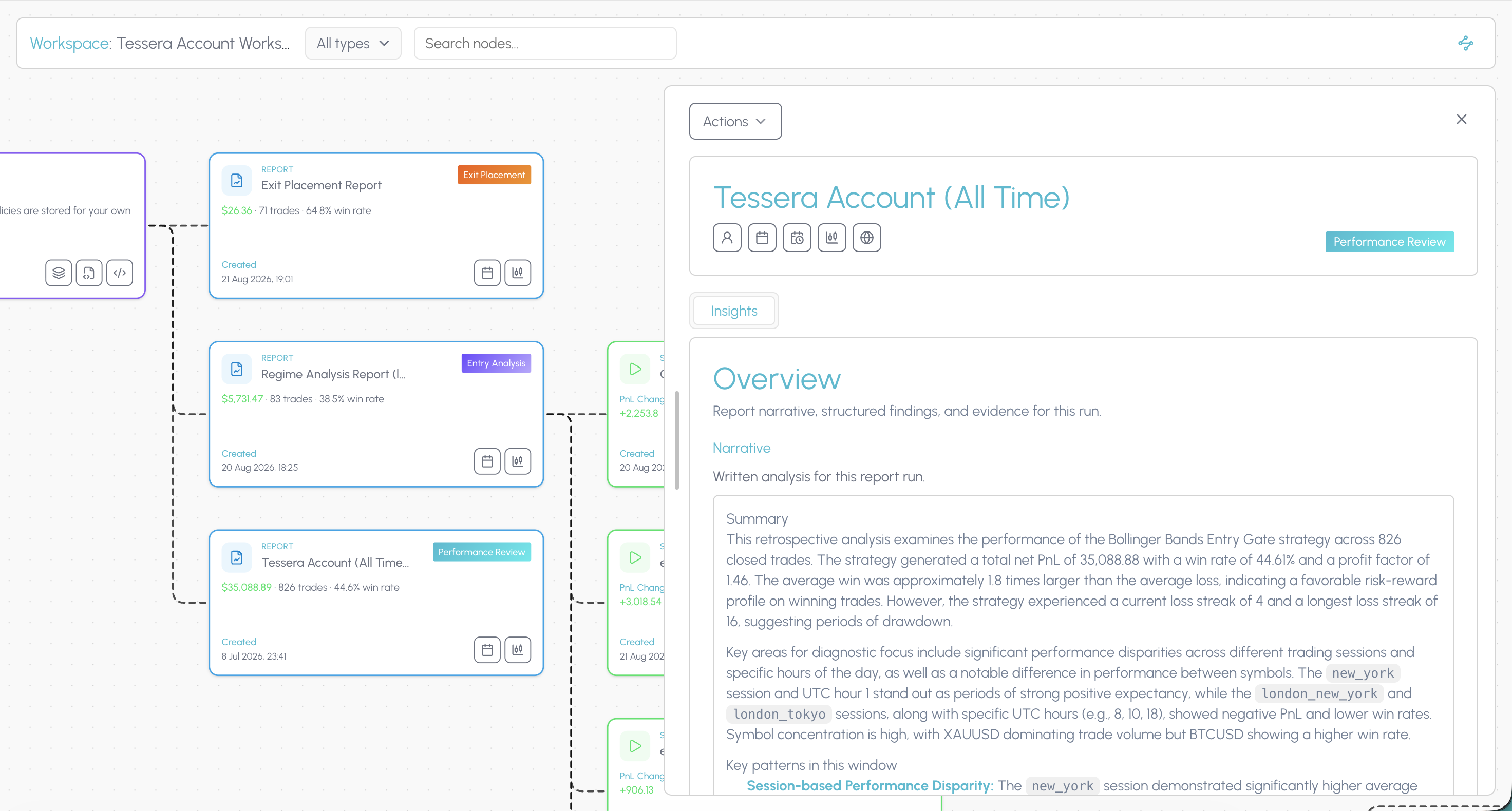
TraderSync packs imports, reports, tags, AI and replay into one dense screen, but the lineage between them is easy to lose. Tessera's connected workspace is built for a full overview: your trade data, the reports you ran on it, the simulations that tested a change, and the policies that came out the other side.
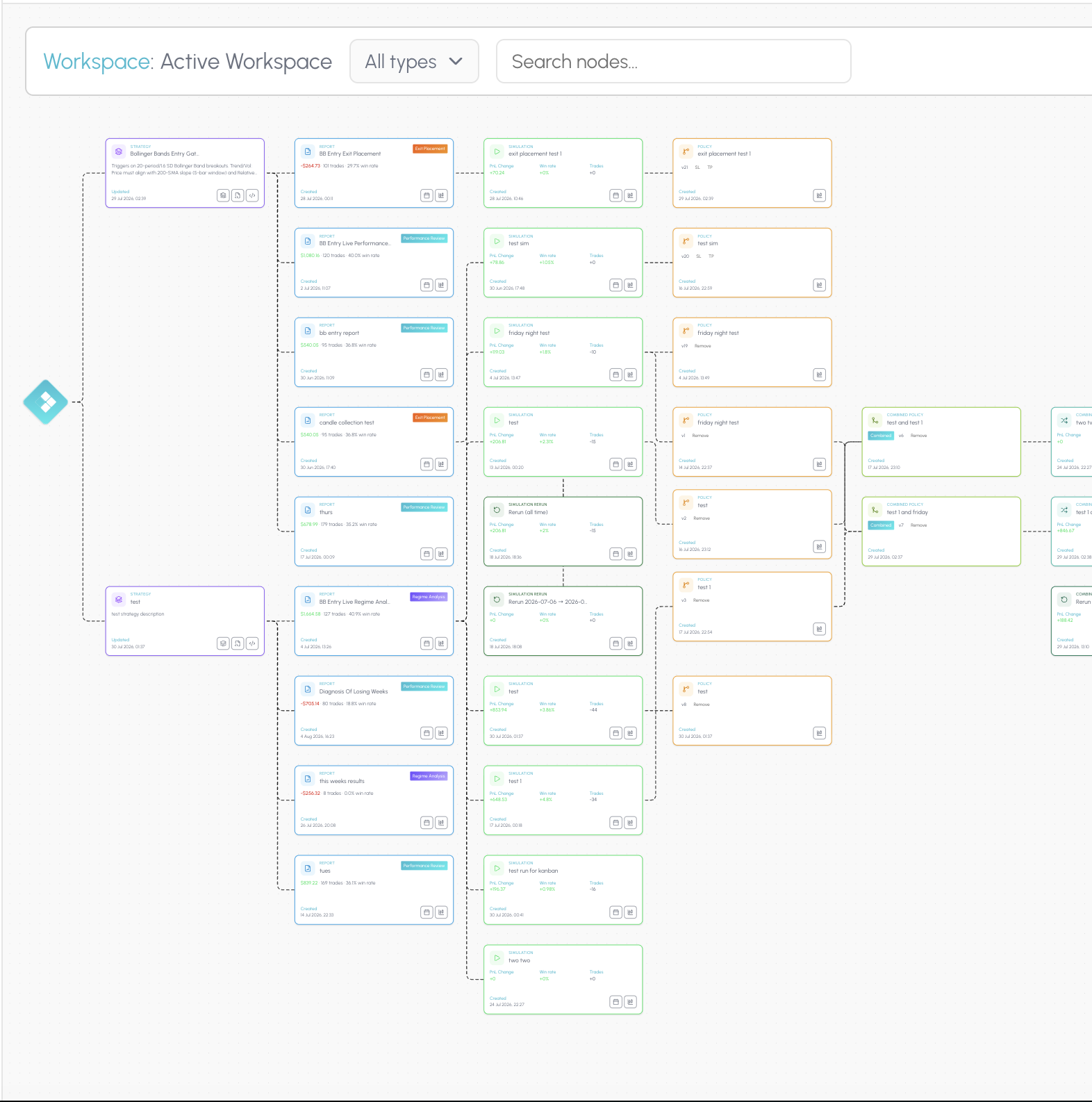
The hub shows every strategy, report, simulation and policy you have built, without hopping between pages for each artefact type. Open a workspace canvas and those pieces become a node graph linked by what produced what. Cypher can tell you a session was weak. The workspace shows which report surfaced it, which simulation tested the fix, and which policy you kept.
That is how you see whether a rule actually held up after you changed it, not just whether the chat felt convincing. Explore the workspace.
Both products use the word simulator, and they mean different things. This is the distinction that matters most on this page.
TraderSync's Simulator and Evaluator (Premium and above) let you place hypothetical trades on historical charts. You scroll back through past price action and practise, or you test a setup idea on trades that never happened. It is a training and idea generation tool, close in spirit to replay.
Tessera's simulator applies a rule change to the trades you actually took. Same fills, same history, one variable moved. Add an entry filter, or shift stop loss and take profit distance, and see what that closed cohort would have returned. Nothing hypothetical is invented. The output is a comparison against your real result, which you can then save as a policy and compose into Pine.
If you want to practise a setup you have never traded, TraderSync is the right tool. If you want to know whether a filter would have saved your worst month, Tessera is.
| TraderSync Simulator | Tessera simulator | |
|---|---|---|
| Input | Historical price charts | Your closed trades |
| Trades tested | Hypothetical, placed by you | Real, already executed |
| Question answered | Would this setup work? | What would this rule have done to my results? |
| Output | Practice record | Cohort comparison, saveable as a policy and exported as Pine |
Run a free Entry Analysis report, then simulate dropping one group of trades from the history you already took.
A TraderSync alternative still has to journal and measure:
Tessera does not claim wider broker coverage than TraderSync, and there is no native mobile app. It covers the journal foundation, then differentiates on computed reports, counterfactual simulation and Pine policies.
| Feature | TraderSync | Tessera |
|---|---|---|
| Journaling | Notes, tags, screenshots, flexible structure | Trade log notes and setup screenshots, notes on reports, simulations and executing accounts |
| Statistics and analytics | Deep analytics, Strategy Checker, extensive filters | Statistics, dashboard, Performance, Entry and Exit reports |
| Visual trade review | Market replay, fidelity by plan, Level II and time and sales on Elite | Trade Review charts fills, and shows which trades a policy covers after a pick or simulation |
| Trade import | 700 plus brokers and exchanges, mobile capture | Native broker paths plus Custom CSV, map once and reuse |
| AI | Cypher AI question and answer, roughly 5 messages a day on Pro and 15 on Premium, Coach on Elite | TES writes a scoped narrative on prepared report statistics, not metered by message |
| Idea testing | Simulator and Evaluator on Premium and above, hypothetical trades on historical charts | Simulator applies entry filters and SL or TP distance to your closed cohort |
| TradingView and rules export | Import and analysis workflows | Policy Pine merges into a strategy or exports as a standalone indicator |
| Connected workspace | Dense single screen mixing imports, reports, tags, AI and replay | Connected workspace: hub overview plus canvas linking strategies, reports, simulations and policies |
| Mobile | Native iOS and Android apps | Web app |
| Free trial | 7 days, no card | None on self serve access |
| TraderSync (indicative, Sept 2026) | Tessera | |
|---|---|---|
| Plans | Pro $29.95, Premium $49.95, Elite $79.95 a month | Standard $19, Plus $39 |
| Annual billing | Available at a lower effective monthly rate, terms vary | See pricing |
| What is included | Cypher caps, replay fidelity, account limits and idea testing all vary by tier | Same product features on both plans. Plus raises report and simulation caps |
| Free tier | None | None |
| Free trial | 7 days on all plans, no card | None on self serve access |
Two differences worth naming plainly. TraderSync gates its idea testing and its useful AI limits behind the middle and top tiers, so the realistic comparison is Premium at $49.95 rather than Pro at $29.95. Tessera runs the same feature set on Standard and Plus, and the plans differ only in how many reports and simulations you can run.
The other difference runs the other way. TraderSync gives you a seven day trial and Tessera does not. What we offer instead is a free trade analysis report on your own history, so you can see the output on your trades before you pay anything.
Tessera is a connected product suite on your closed trades: journal and statistics, focused reports, a simulator, policies, and Pine export, kept together on one workspace.
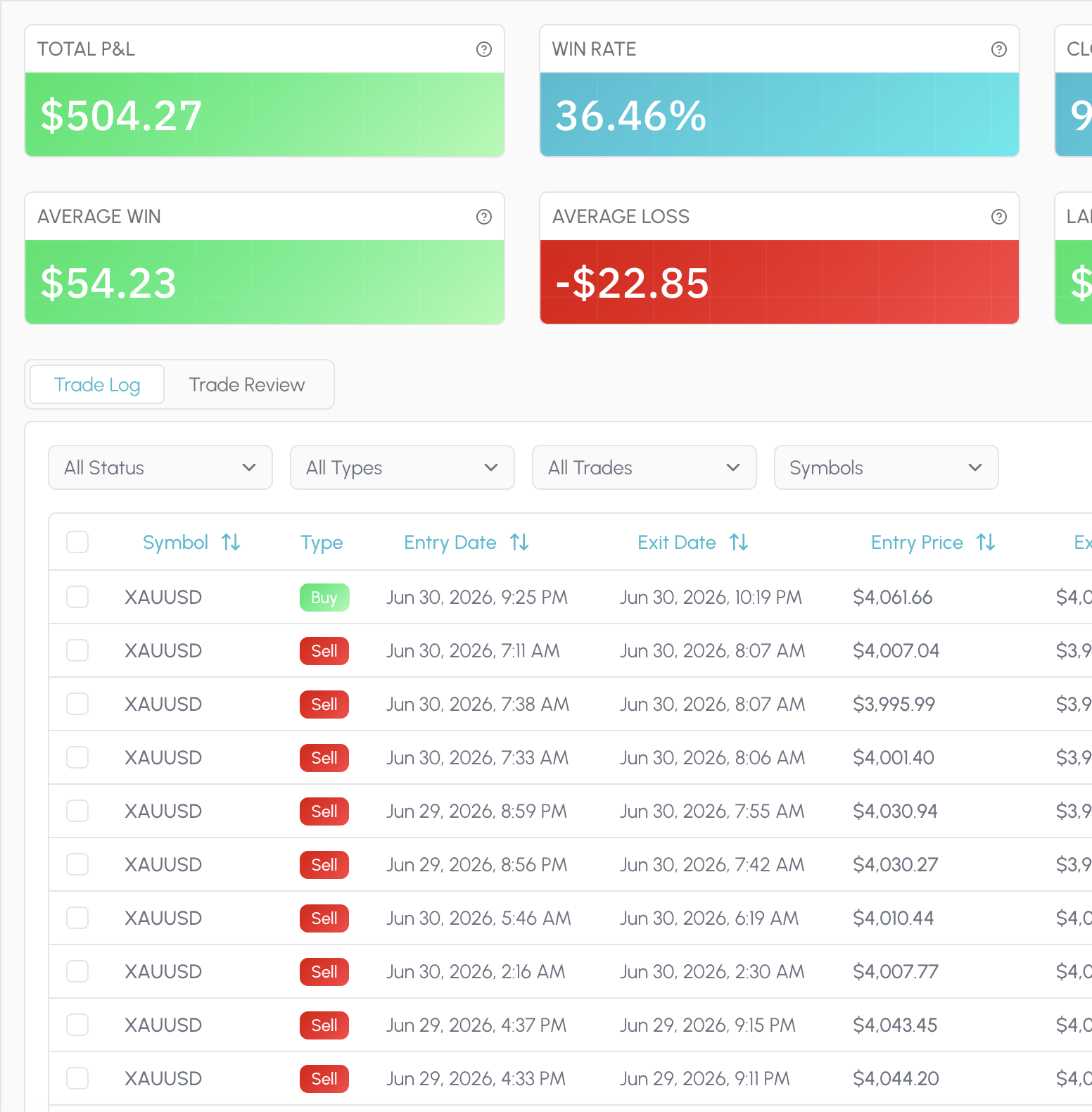
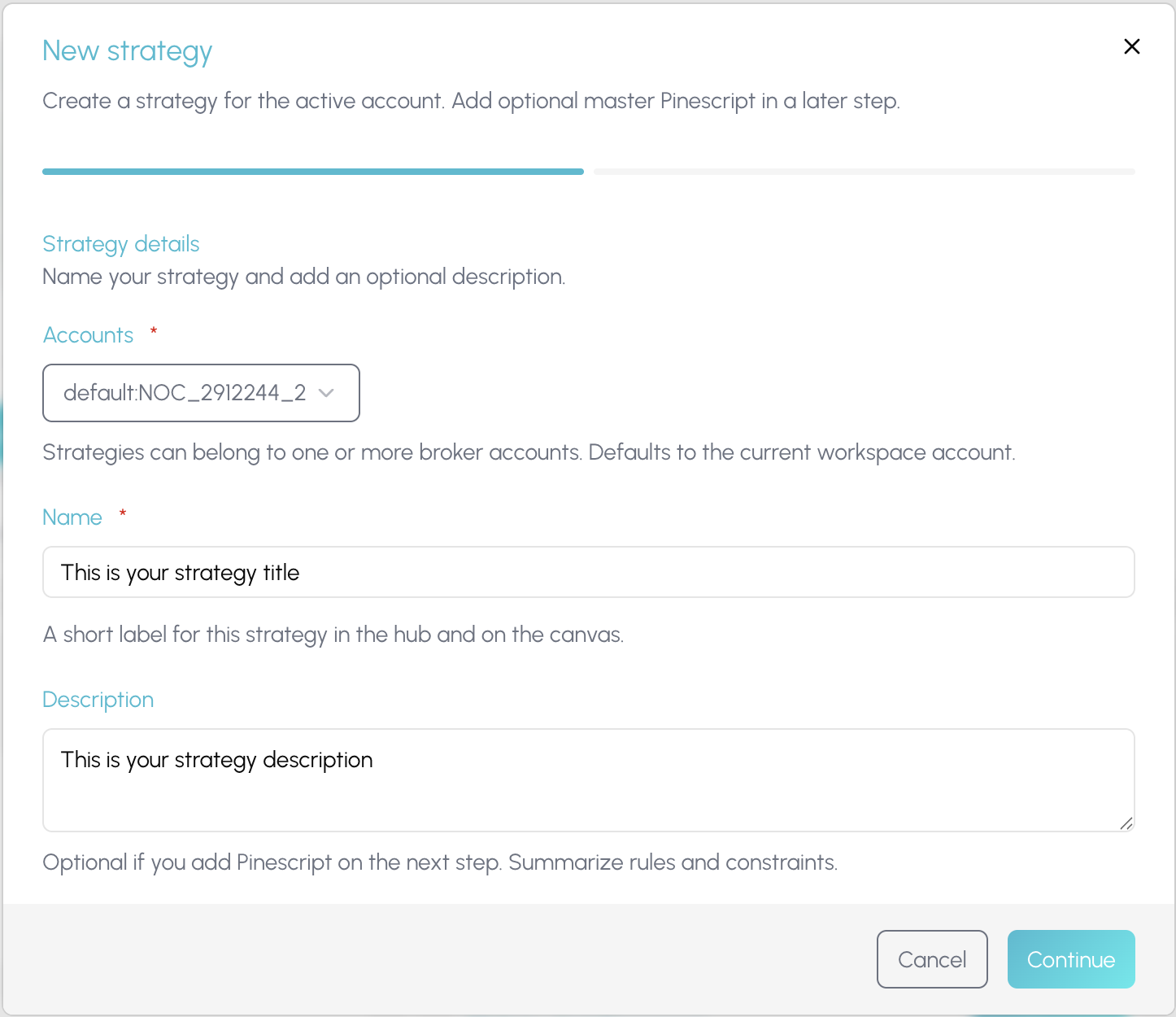
Every fill lives in one place: synced from a broker or imported once through Custom CSV with a mapping you can reuse. Attach a market snapshot and a short note when the trade still matters, not as a mood ritual, but as context for later review.
That same history feeds everything else in Tessera. Statistics, reports, simulations and policies all read the closed trades you already took, so you are not stitching exports together every Sunday.

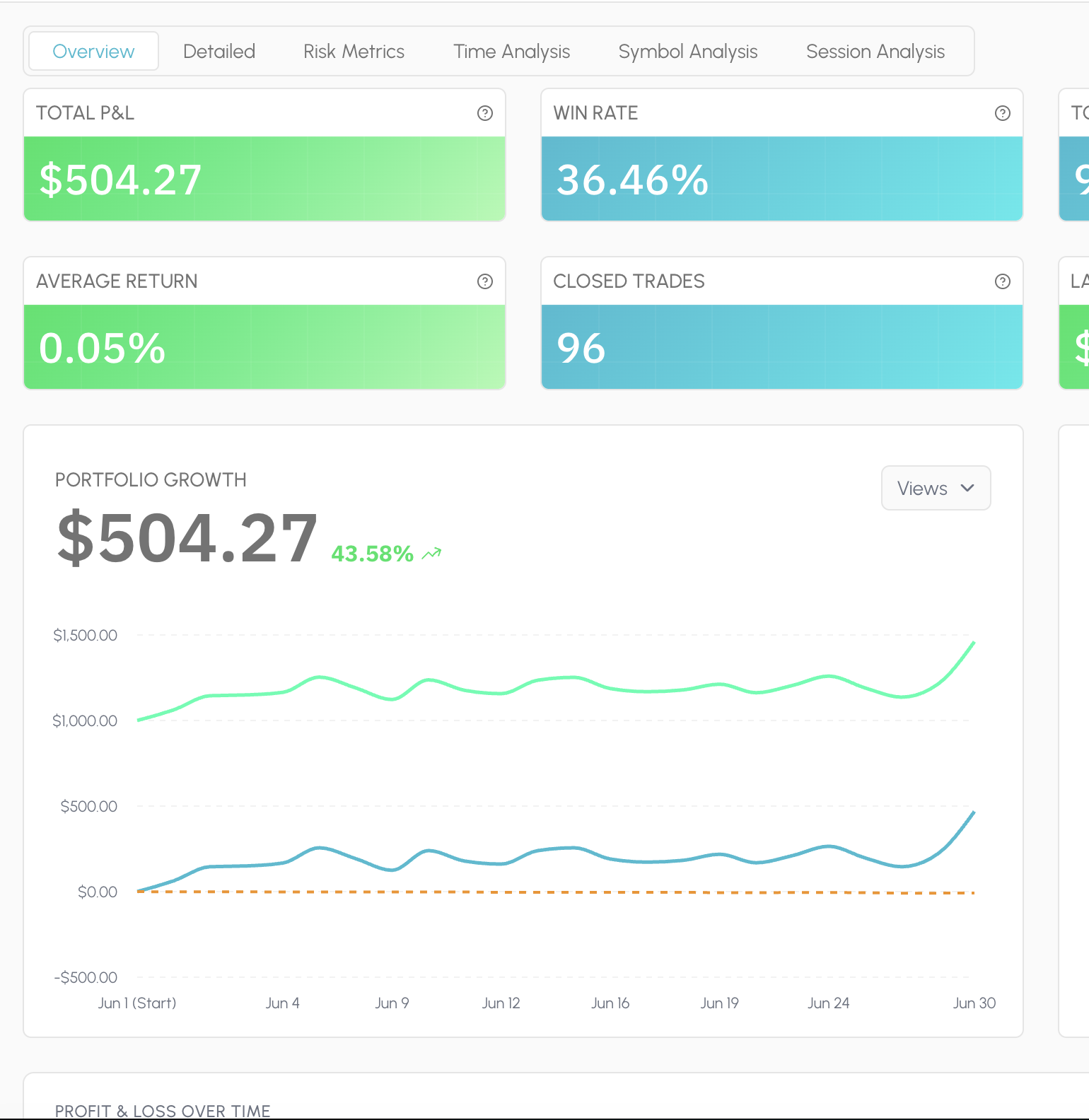
Statistics is the always-on read of your book: PnL, win rate, expectancy, drawdown, sessions, symbols, timing and risk, laid out so you can scan a period and move on. Filter the window and the charts follow the trades you selected.
There is no proprietary Tessera score and no composite grade that flattens your account into someone else's ideal profile. The dimensions stay checkable. When you need a deeper cut than the dashboard, you leave Statistics and run a focused report.

Reports answer a specific question on the same closed history. Performance Review for how a strategy or period actually behaved. Entry Analysis for which conditions at entry separated winners from losers. Exit Placement for whether stops and targets were doing their job.
Condition slices surface the pattern in plain terms: session, trend, volatility, distance to a level, indicator state. You leave with a cohort you can name, not a vague sense that "New York was bad." That cohort is what you take into Trade Review and the simulator next.

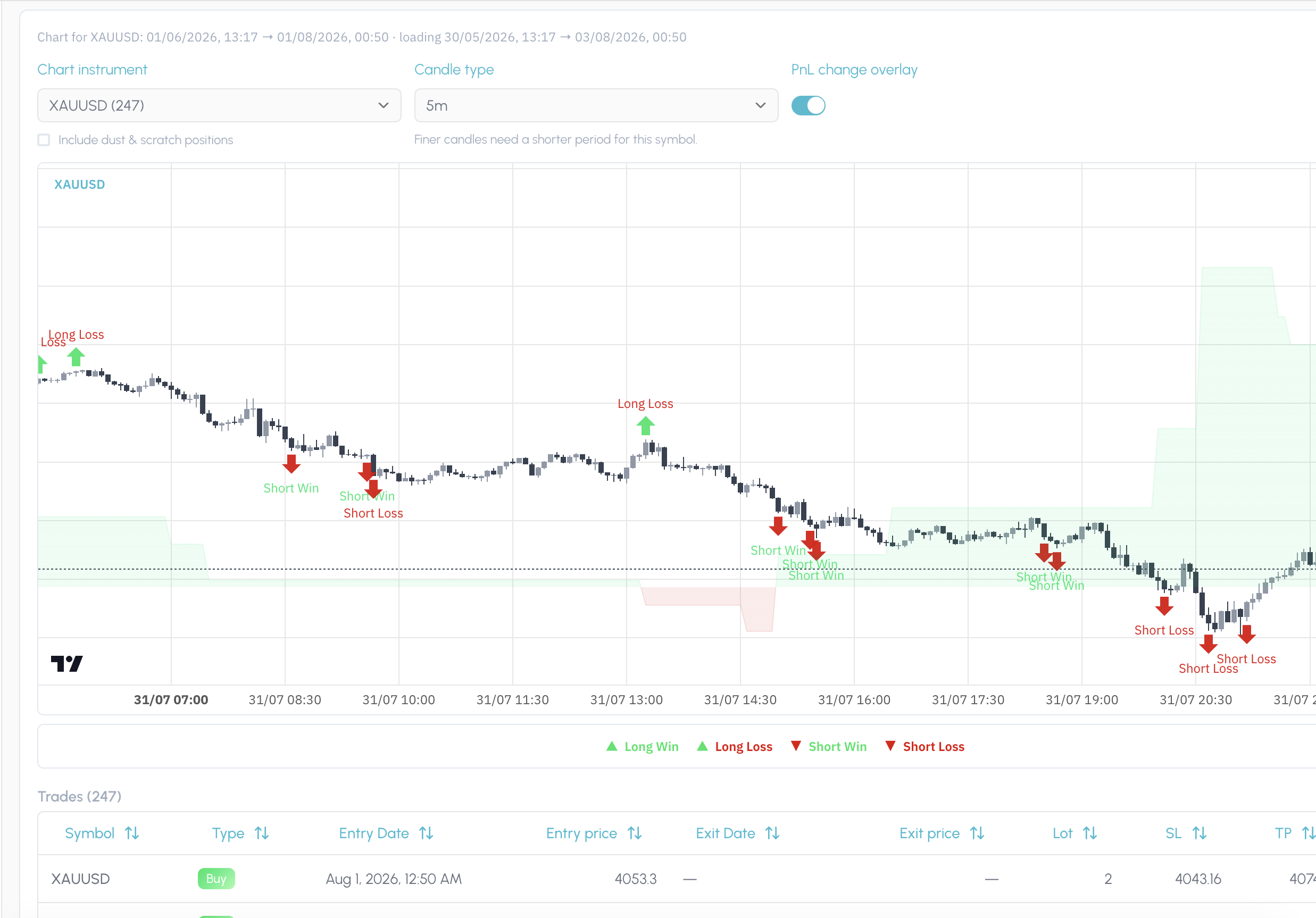
Trade Review puts your fills back on the chart in the price action and regime they happened in. After a report pick or a simulation, it also shows exactly which trades that finding or policy covers, so you are not guessing from a table of ticket IDs.
Use it to confirm the story before you change a rule. If the slice looks wrong on the chart, you catch it here. If it looks right, you have visual proof of the cohort you are about to test.

The simulator asks what would have happened if you had traded the same closed history under a different rule. Keep or drop entries by the conditions present when you took them: session, trend, volatility, indicator state. Or leave the entries alone and vary stop loss and take profit distance.
Run one change at a time so you can see what moved. Compare the filtered cohort against the original. If the result holds up, you are ready to save it as a policy rather than leaving the insight in a screenshot folder.

A policy is a versioned rule attached to a strategy: the keep filter, the veto, the exit distance that survived a simulation. It is not a note in a journal and not a half-remembered habit from last month's review.
When something holds up, you save it, name it, and keep it on the strategy so you can return to it, combine it with other policies, and re-test the stack. The point is a rule you can defend, not a feeling that you should "be more selective in New York."

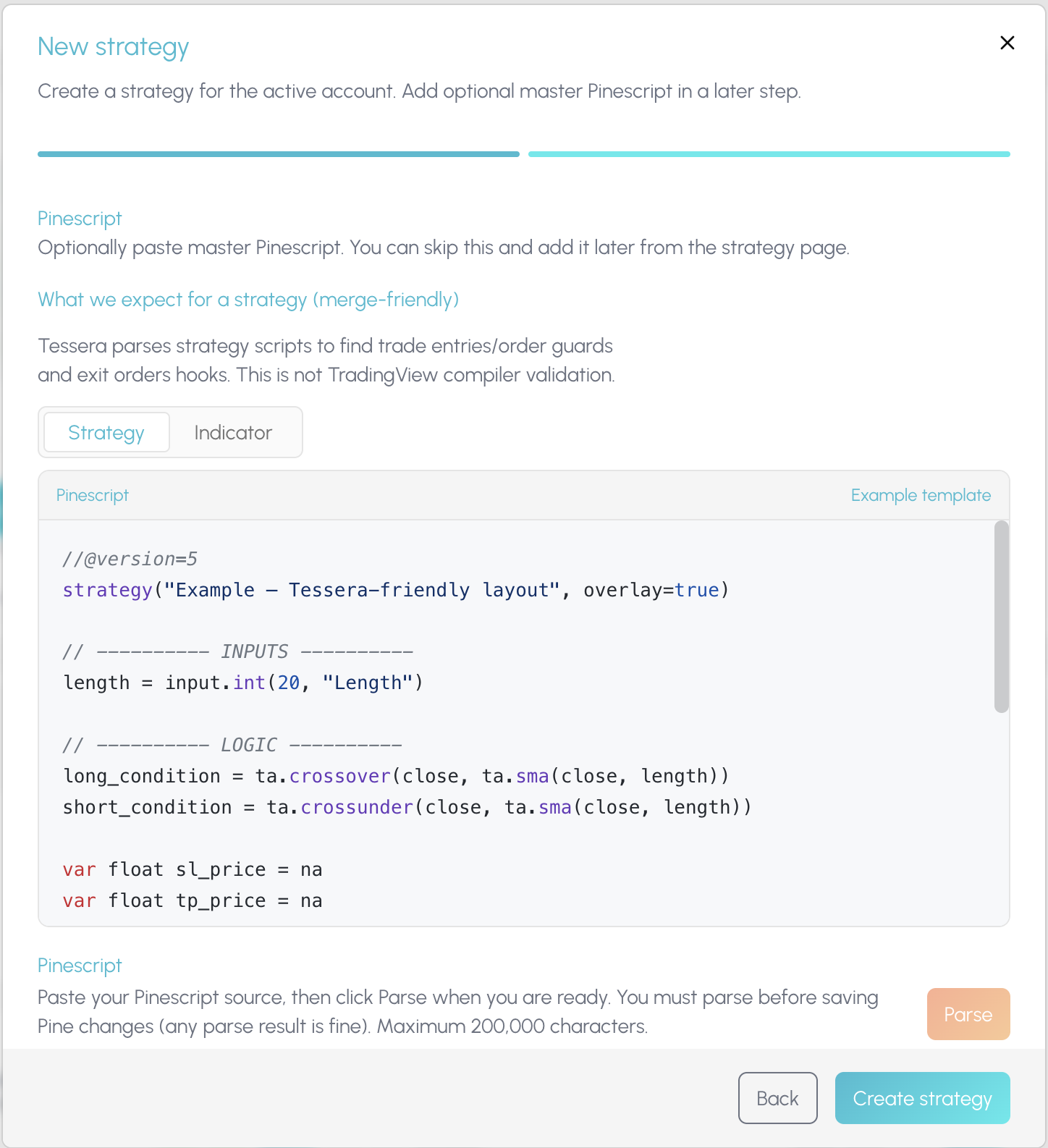
Once a policy is worth forward testing, Policy Pine composes it into TradingView. Merge the rule into a copy of your existing strategy script, or export it as a standalone indicator you paste onto the chart yourself.
Tessera does not auto-push to your TradingView account. You stay in control of what hits the chart. The composed Pine is the bridge from a tested cohort back into live forward testing, with the experiment trail still sitting in Tessera.

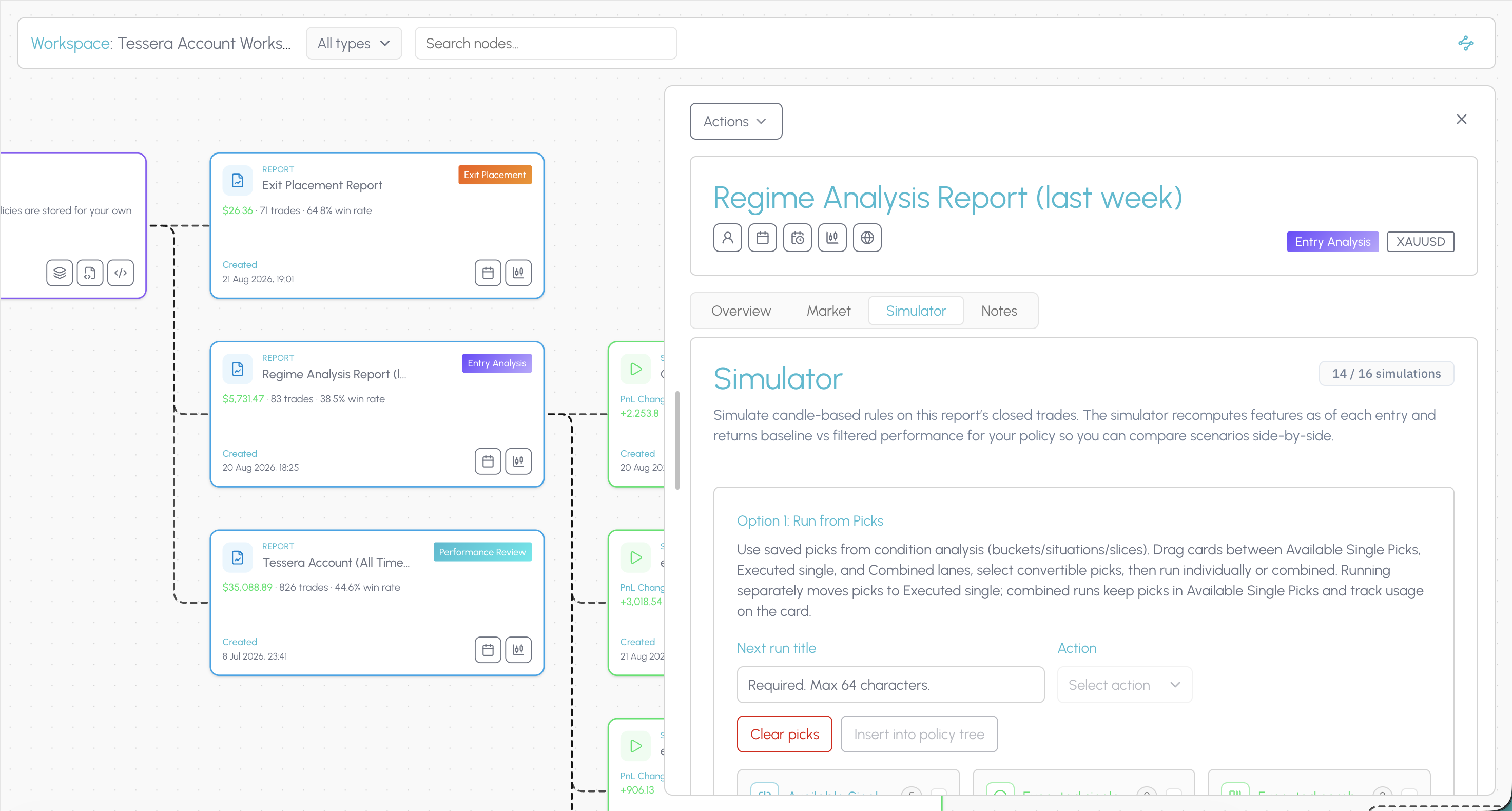
The connected workspace is where the suite stops being a list of tools. The hub shows every strategy, report, simulation and policy you have built. Open a canvas and those pieces become a node graph linked by what produced what.
When a filter improves a cohort, you can still see the Entry Analysis that surfaced it, the simulation that tested it, and the policy you exported, on the same trail. That is how you know whether a change held up across your process, not only whether one review session felt better.
TES can narrate a prepared report when you run one. Tessera does not ship a dedicated tilt score or an automated weekly scan of your whole journal. Findings are hypotheses, not conclusions. Forward test before you commit size.

Connect your trade log, run focused reports, and test one rule change at a time on trades you already took.
The realistic shortlist in 2026:
| Tool | Roughly | Pick it when |
|---|---|---|
| TradeZella | $35 to $99 a month | You want polished tick replay, playbooks and PropFirm Sync. See the TradeZella alternative comparison |
| Tradervue | Free tier (30 trades a month), $29.95 or $49.95 | You want granular statistics such as MFE, MAE and exit efficiency, and a free way to start |
| Edgewonk | $197 a year | You want behavioural analysis on a one off annual licence. Desktop only. See the Edgewonk alternative comparison |
| TradesViz | Free tier, paid plans above | You want charting volume and analytics depth above all else |
| Tessera | $19 or $39 a month | You want to test rule changes on real fills, then export the rule to TradingView as Pine |
If your broker is on TraderSync's native list but not ours, keep the CSV route. Map once and the template is reusable every month.

You are rules based, or you write Pine, and you want policy export rather than only AI chat
You want to test a rule against the trades you actually took, not hypothetical trades on old charts, with the simulator
You prefer TES, which reads prepared statistics and is not metered by daily messages
You want the full feature set at $19 a month rather than the useful parts at $49.95
You need a Custom CSV template for an unsupported statement format
You want a connected workspace that links your data, testing and the results of your changes in one overview
Cypher coaching, and Coach on Elite, is how you want to improve
Native mobile apps for logging on the go are essential
Granular or Level II style replay is central to your review
You need the widest possible broker list out of the box
A free trial before you pay is non negotiable
Edgewonk alternative
Edgewonk varies exits on the trades you took. Tessera does that too, filters which entries qualify, and exports the surviving rule to TradingView as Pine.
Read comparisonTradeZella alternative
TradeZella is strong on replay, playbooks and PropFirm Sync. Tessera runs counterfactual tests on your real fills and exports the result to TradingView as Pine.
Read comparisonTraderSync is a trademark of its respective owner. Tessera is not affiliated with, endorsed by or sponsored by TraderSync. Comparisons reflect publicly available information as of 2 September 2026 and may change.
Run a free Entry Analysis report, simulate one filter on your closed history, and see whether the cohort improves before you change how you trade.