

23-Hour Stock Trading Starts 6 December: What It Means for Algo Strategies
Nasdaq 24 hour trading (23/5) is set to start 6 December 2026 with a 9pm-4am ET session. What it changes for algo backtests, session filters and fills.
By Tessera Trades · Updated · 11 min read
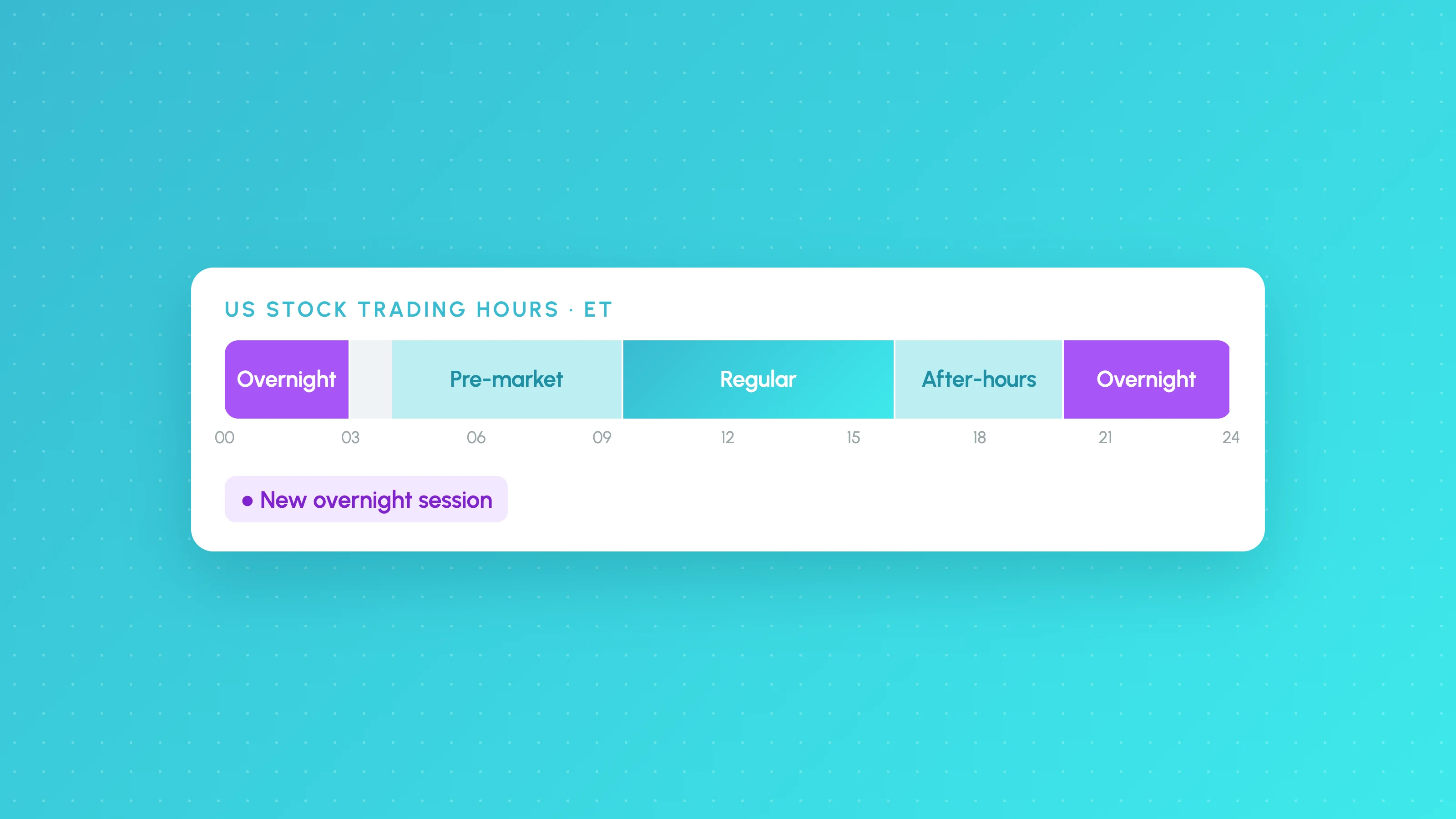
Nasdaq "24 hour trading" is set to start on 6 December 2026, when Nasdaq and NYSE Arca are targeting launch of an overnight session that takes US stocks and ETFs to about 23 hours a day, five days a week: 9pm to 4am ET, Sunday to Thursday nights. There is still a one-hour pause from 8pm to 9pm ET and no trading at weekends.
For an algo strategy the change is less about the extra hours and more about the details: only limit orders overnight, a session your backtest data has never seen, thin liquidity, and trade dates that roll over at 9pm rather than midnight. This guide sets out what is confirmed as of 2026-10-30, what it means for session filters, backtests and fills, and how to judge overnight trades separately from the rest. We will update it as the launch happens.
What is changing on 6 December
The SEC approved Nasdaq's proposal to extend trading in NMS stocks and ETPs on 10 April 2026, and NYSE Arca filed its amended framework on 12 May 2026. Both exchanges are targeting 6 December 2026 for launch. According to WilmerHale (29 September 2026), the SEC has conditionally approved 23x5 trading on five exchanges (24X, Cboe EDGX, MEMX, Nasdaq and NYSE Arca), and the exchanges say they will start when the consolidated data feeds (the SIPs) are ready on 6 December. As of late October 2026, several rules needed to implement the framework still required SEC approval, with more technical and fee-related filings expected before launch, so treat the date as a target until it happens.
| As of 2026-10-30 | |
|---|---|
| Overnight session | 9pm to 4am ET, Sunday to Thursday nights |
| Daily pause | 8pm to 9pm ET, Monday to Thursday |
| Trading week | Sunday 9pm ET to Friday 8pm ET |
| Nasdaq sessions | Night Session (9pm to 4am) and Day Session (4am to 8pm, combining pre-market, regular and post-market) |
| NYSE Arca sessions | Overnight, Early, Core and Late, with existing hours unchanged |
| Regular hours | 9:30am to 4pm ET, with opening and closing auctions unchanged |
| Order types overnight | Limit orders only; unpriced orders such as market orders are not permitted |
| Trade date | Trades from 9pm to midnight ET carry the next calendar day's trade date |
Sources: Harvard Law School Forum on Corporate Governance (21 October 2026), Arnold & Porter (April 2026), WilmerHale (29 September 2026).
A few rules matter for automated strategies in particular:
- Limit orders only. WilmerHale notes that the overnight sessions will only accept orders with a limit price, because lower liquidity and wider spreads make market orders riskier at night.
- Static price bands. Overnight bands are static, 20% below the lower and 20% above the higher of two reference prices (the official close and the last round-lot sale as of 7:45pm ET), subject to minimum band sizes, and hitting a band does not trigger an automatic pause.
- Halts last the night. A stock halted overnight will not reopen until the next regular session, and stocks with certain corporate actions (splits, symbol changes, large dividends, mergers and others) are halted for the overnight session before the action takes effect.
- Orders don't carry across sessions. Jones Day notes that orders do not carry across session boundaries, and that overnight trades are reported with the extended-hours "T" condition and are not last-sale eligible.
Who can trade it, and which brokers
Only US broker-dealers that are members of Nasdaq or NYSE Arca can trade the overnight session directly. Everyone else, including retail traders and their bots, reaches it through a member broker. Brokers can also use firm-level controls to block some client orders overnight, so exchange hours and your broker's hours may not match.
Overnight stock trading already exists through alternative trading systems. WilmerHale lists four ATSs that trade overnight today: Blue Ocean ATS, Bruce ATS, IBKR Eos ATS and MOON ATS. Some brokers route overnight orders to these venues now, with their own hours and order rules. Which brokers will route to the exchange sessions from 6 December, and how their APIs will expose them, is up to each broker, so check your broker's own announcement and API documentation rather than assuming your existing order code will work at 10pm.
Why session-based strategies are affected
Most equity strategies have time built into them, even when the code doesn't say so. Three common places it hides:
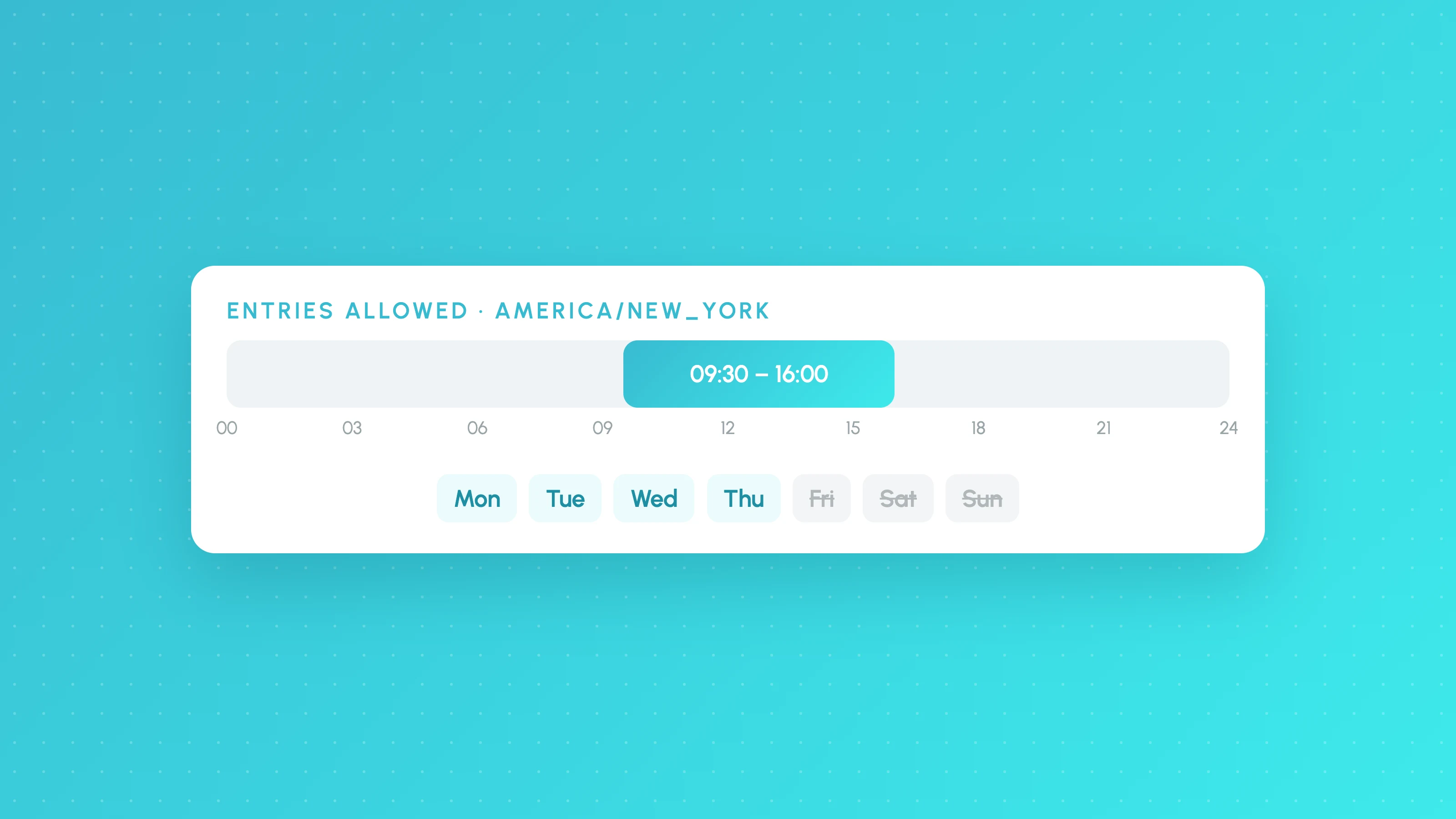
- Session filters. A filter such as
"0930-1600"keeps working, but a strategy written with no filter, or with "extended" hours in mind, will start seeing new bars between 9pm and 4am if your data includes them. Our Pine Script session filter guide covers the syntax and time zone handling. - Daily anchors. Anything that resets at the start of a session (VWAP, the day's high and low, opening range, "first bar of the day" logic) depends on where your platform thinks the session starts. On a 24h chart that may be 9pm the evening before, not 9:30am. Check where each indicator resets before and after you switch session settings.
- Gaps. Strategies that trade the gap between the 4pm close and the 9:30am open assume nothing tradeable happens in between. With more volume overnight, part of that move may happen through real trades at night, and the gap your strategy measures could change character.
The 9:30am opening auction and 4pm closing auction stay as they are, so strategies built only on regular hours keep their reference prices. What changes is what happens around them.
Backtesting a session that has no history
There is no exchange history for a session that hasn't opened yet. The nearest proxy is ATS data. TradingView added Blue Ocean ATS data in August 2025 (under the BOATS: prefix), and its 24h session setting merges regular hours, extended hours and overnight data on intraday charts for supported US stocks. Blue Ocean's marketplace launched in 2021, so for some symbols there are a few years of overnight bars to test on.
Treat those bars with care:
| Issue | Why it matters for a backtest |
|---|---|
| Thin volume | Overnight volume was about 0.9% of total NMS share volume on an average trade date, according to SEC staff data as of August 2026 (though growing fast). Bars built from few trades can show prices you could not have traded size at |
| Wider spreads | A backtest that fills at bar prices ignores the spread. Overnight it can be most of the edge |
| Different venue | ATS liquidity before December is not the same as exchange liquidity after it. Results on old ATS data may not describe the new session |
| Limit-only fills | A backtest using market orders overnight is testing orders you can't place. Use limit entries and make limit fills conservative |
| Short sample | A few years of night bars, split by symbol, quickly falls below a useful sample size |
If you backtest overnight entries at all, use limit orders, add a spread-sized slippage assumption (our guide to slippage in algo trading covers how to set one), and expect live results to differ from the test. The same causes that open a gap between backtest and live are all stronger overnight.
Should your algo trade the overnight session?
Nothing about the new hours makes a strategy more profitable. The extra session is a new market condition with its own liquidity and costs, and the useful question is whether your strategy's edge survives in it. A practical way to decide:
- Start excluded. Keep entries restricted to the hours you tested, and make the overnight session an input you can switch on, rather than letting new bars change behaviour without you noticing.
- Test the session on its own. Run the strategy with overnight entries allowed, then split the results by session. Compare the overnight slice with the day slices on average trade, profit factor and trade count, not just total profit.
- Price it realistically. Re-run the overnight slice with wider slippage. If the edge disappears with a spread-sized cost, it was not there.
- Check the sample. Thirty or so overnight trades is enough to ask a question, not to answer it.
- Forward-test small. Once the exchange session is live, trade it at minimum size or on paper and compare the fills with what your test assumed.
The same logic applies in reverse: if your strategy already holds positions overnight, the new session means those positions can now be traded at night. A stop that used to fill at the next morning's open may now trigger at night, but because the exchange sessions accept only priced orders, how it behaves (held until the day session, converted to a stop-limit, or simulated by your broker) depends on your broker, so check before relying on it. A stop-limit that triggers at 2am on thin volume may also not fill at all.
Trading overnight adds risk as well as hours; none of this suggests overnight trading will improve a strategy's returns.
Adding or excluding the overnight session in Pine Script
On TradingView, the chart's session setting decides whether overnight bars exist at all. With the chart on 24h, this filter treats 9pm to 4am New York time as its own session and only allows entries there when you switch it on:
//@version=6
strategy("Overnight session switch", overlay = true)

nightSession = input.session("2100-0400", "Overnight session")
allowNight   = input.bool(false, "Allow entries overnight")
tz           = "America/New_York"

inNight  = not na(time(timeframe.period, nightSession, tz))
canEnter = allowNight or not inNight

longSignal = ta.crossover(ta.ema(close, 20), ta.ema(close, 50))

if longSignal and canEnter
    // Limit entry: the exchange night sessions accept limit orders only
    strategy.entry("Long", strategy.long, limit = close)

// Exits run on every bar, inside or outside the session
strategy.exit("Exit", "Long", loss = 200, profit = 400)
The Pine Script sessions documentation shows session strings that cross midnight, such as "2000-1630", so "2100-0400" is read as starting in the evening and ending the next morning. Pass the time zone explicitly so the window doesn't drift with daylight saving. Keep exits outside the filter: a position opened in the day session can now move overnight, and an exit that only runs inside a session can't respond. In live trading, remember that loss = sends a stop order, which the exchange night sessions will not accept as a market order; check how your broker handles stops overnight.
Evaluating overnight trades separately
Once a strategy trades at night, a single equity curve hides the question you care about. Split the trades by when they were taken, the same way you would analyse a backtest by session and hour:
| Slice | What to compare |
|---|---|
| Overnight (9pm to 4am ET) | Trade count, average trade, profit factor, average slippage against your test |
| Pre-market (4am to 9:30am ET) | Same, to see whether the early session behaves like the night or the day |
| Regular hours (9:30am to 4pm ET) | Your baseline |
| Post-market (4pm to 8pm ET) | Same |
Two practical details. First, use the time of entry, not the trade date: a trade at 10pm on a Tuesday carries Wednesday's trade date, so a weekday breakdown built from trade dates will put it on the wrong day. Second, use one time zone for everything. Exports that mix UTC and New York time will put overnight trades in the wrong bucket around daylight saving changes.
Tessera's reports break a strategy's trades down by time of day, weekday, session and volatility, with the trade count behind each slice, so the overnight hours show up as their own rows in the time-of-day breakdown, from a TradingView Strategy Tester export or a live broker sync such as Interactive Brokers. If the overnight hours look like a drag, the simulator replays a time filter on the trades the strategy already took, on real candles, and a rule that holds up can be exported into a copy of your Pine Script. Tessera analyses trades; it does not place them or generate new fills, so the overnight sample is only as good as the trades you feed it.
Before trusting any session result, run it through the backtest validation checklist, which includes checks for a slice that is only a fit to noise.
Update log
- 2026-10-30: Published. Launch targeted for 6 December 2026, pending remaining SEC approvals and SIP readiness. This page will be updated as the launch happens.
Frequently asked questions
- When does 24 hour stock trading start?
- Nasdaq and NYSE Arca are targeting 6 December 2026, with the first overnight session opening on Sunday 6 December at 9pm ET. It is 23 hours a day rather than 24, because of a one-hour pause from 8pm to 9pm ET Monday to Thursday, and there is no weekend trading. As of late October 2026 some implementing rules still needed SEC approval, so the date could move.
- Can I place market orders in the overnight session?
- No. The approved framework allows only orders with a limit price overnight, and unpriced orders such as market orders are not permitted. If your bot sends market orders, change it to limit orders before it runs at night, and backtest overnight entries with limit orders too.
- How will overnight trading affect my trading strategy?
- If your strategy only trades regular hours and doesn't hold positions overnight, very little changes, as the 9:30am open and 4pm close auctions are unchanged. If it holds overnight, uses gaps, or uses indicators that reset at the session start, check how each behaves with overnight bars on the chart. Positions held overnight can now be traded during the night session, but stop orders may behave differently because only limit-priced orders are accepted, so check how your broker handles them.
- Should my algo trade the overnight session?
- Only if it holds up when tested on its own, with realistic spreads and enough trades. Start with overnight entries switched off, test the session separately, re-run it with wider slippage and compare it with your day-session results. Thin liquidity and a short history make it easy to mistake noise for an edge.
- Can I backtest the overnight session on TradingView?
- Partly. TradingView's 24h session setting merges overnight data from Blue Ocean ATS with regular and extended hours for supported US stocks on intraday charts. That data comes from an ATS with low volume, not from the new exchange sessions, so treat any backtest on it as a rough guide.
- Which brokers will offer 23-hour trading?
- Only member broker-dealers of Nasdaq or NYSE Arca can trade the sessions directly, and retail traders reach them through a member broker. Some brokers already offer overnight trading through ATSs such as Blue Ocean and IBKR Eos. Check your broker's announcement and API documentation for its own hours and order rules. If you want to see how your strategy does by session before deciding, a free Entry Analysis report breaks your trades from a synced broker, a platform export or any spreadsheet down by session, time of day, weekday and volatility, with no card needed.
Keep reading
 AI and Pine Script
Pine Script Session, Time and Day of Week Filters (v6)
Copy-paste Pine Script v6 session, time-of-day and day of week filters, with time zone and DST handling, exits outside the filter and an overfitting check.
 TradingView backtests
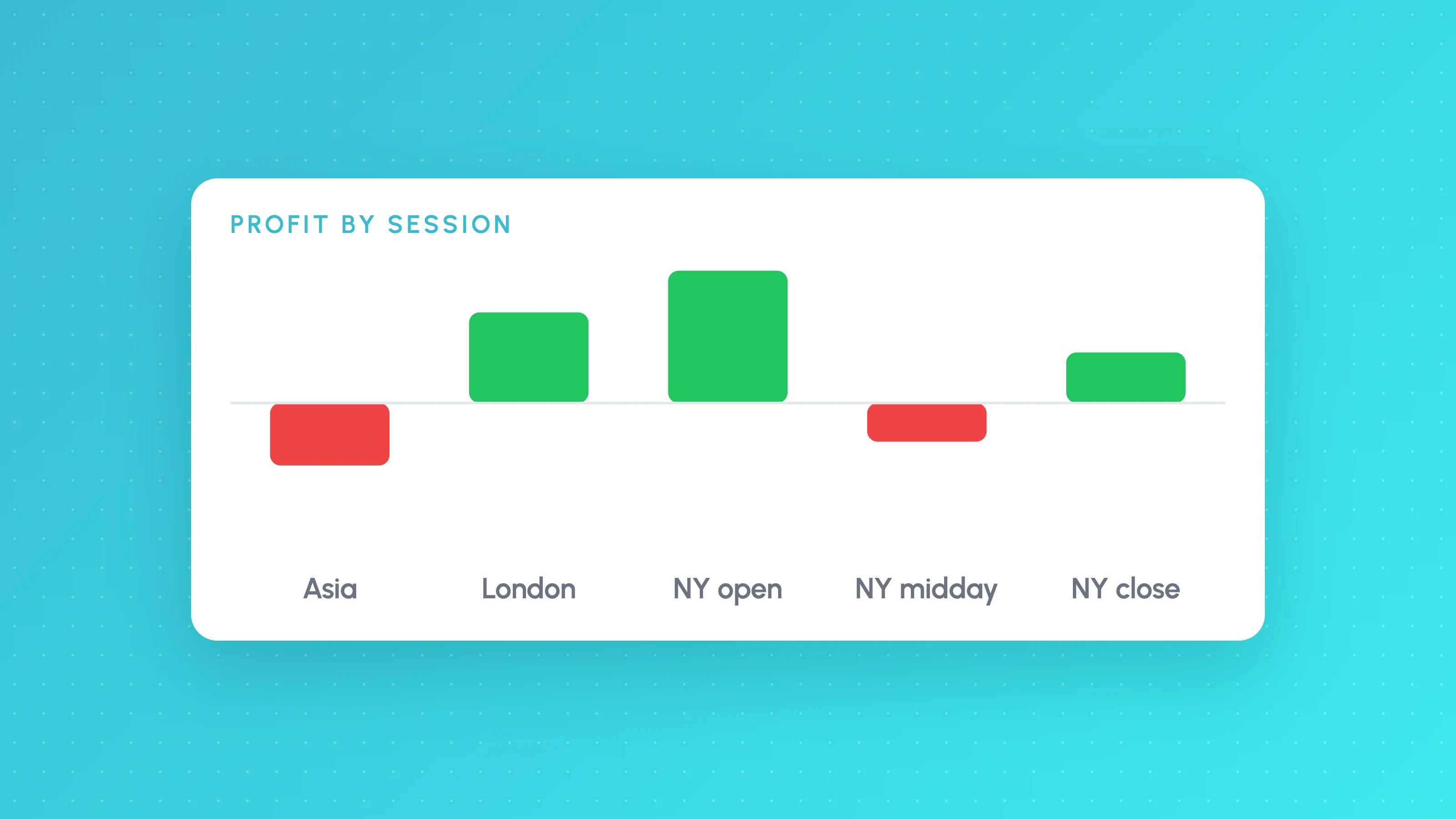
How to Analyse a TradingView Backtest by Session, Weekday and Hour
Analyse a TradingView backtest beyond the summary: split trades by session, weekday, hour, volatility and direction, check sample sizes, then test the rule.
 TradingView backtests
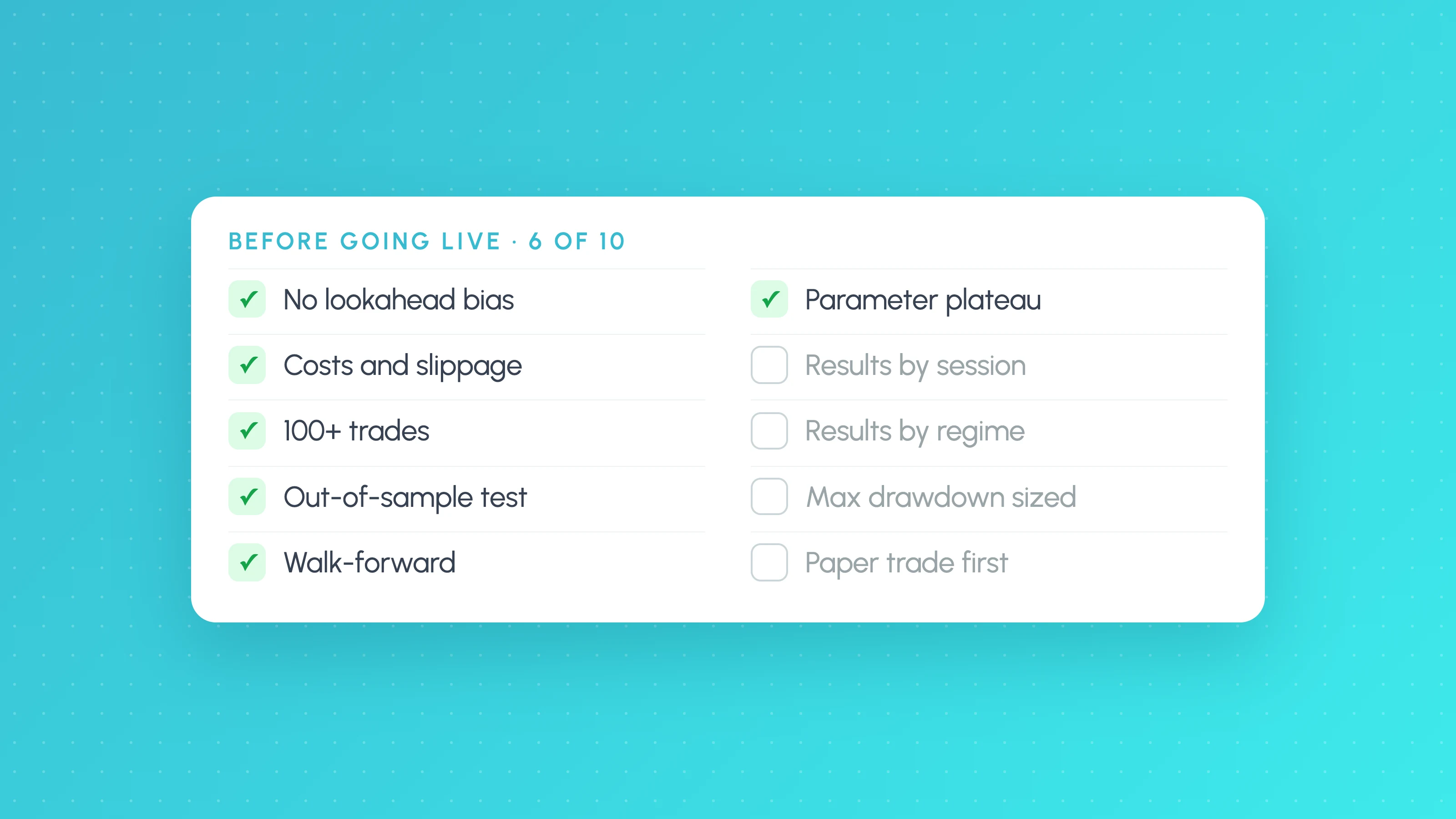
Backtest Validation Checklist: 10 Checks Before You Trade a Strategy Live
A backtest validation checklist: 10 checks to run before going live, from costs, fills and repainting to out-of-sample, Monte Carlo and forward tests.