

London Breakout Strategy: Asian Range Rules and How to Test Them
The London breakout strategy explained: the Asian range, entries at the London open, stops, targets and filters for false breaks, which pairs suit it, and how to test it.
By Hristo Skulev · Updated · 4 min read
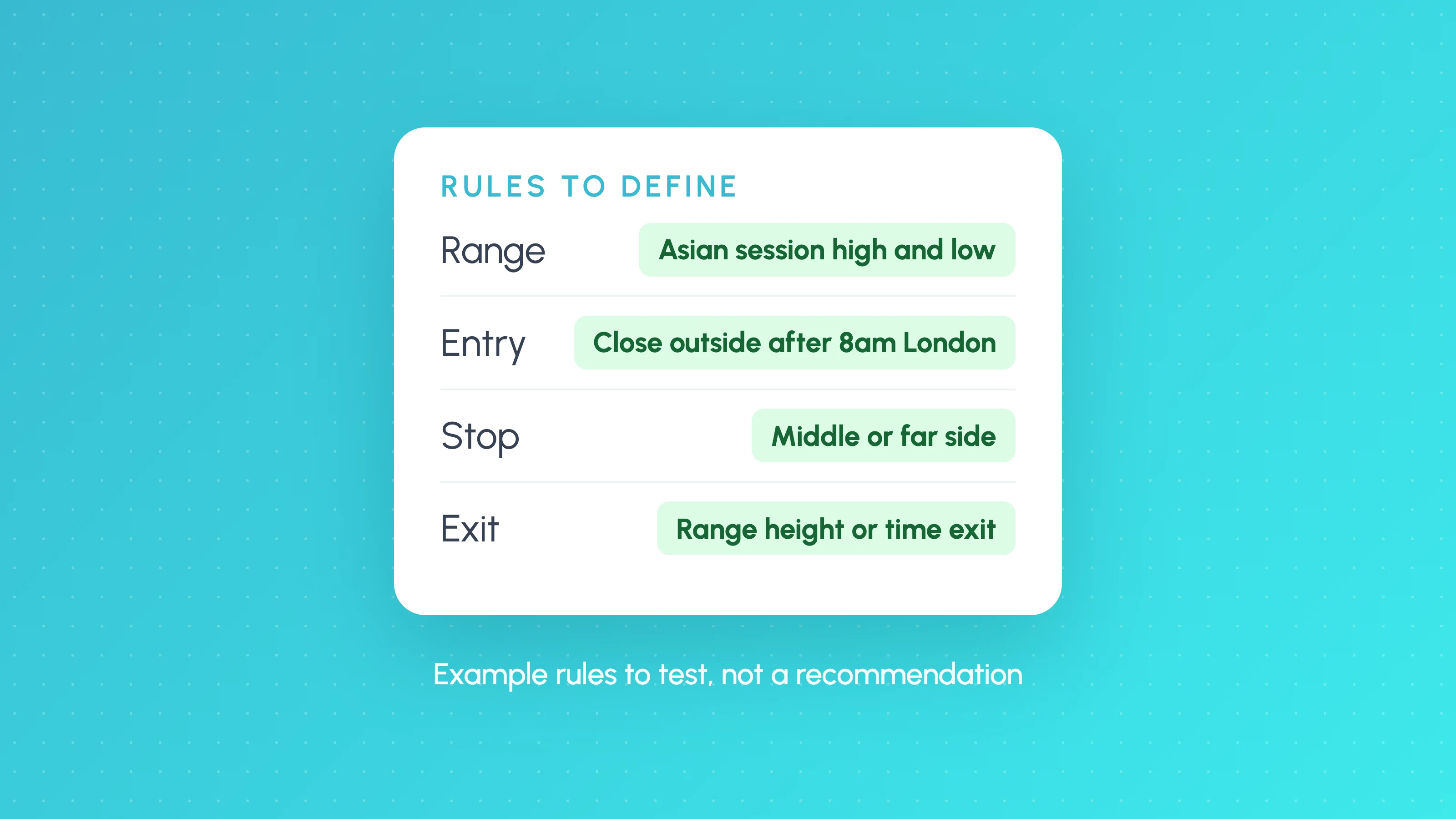
The London breakout strategy marks the high and low of the quieter Asian session and trades the break of that range when London opens, because the London session usually brings the biggest jump in forex volume and volatility of the day. A long is triggered when price breaks above the Asian high after the London open, a short when it breaks below the Asian low, with the stop inside or on the other side of the range and a target based on the range height or a fixed R.
It is the forex cousin of the opening range breakout, and it has the same weakness: false breakouts on days when London doesn't bring a real move.
This is an educational description, not a recommendation. Backtests are not future results, and leveraged trading carries a high risk of loss.
The basic rules
| Rule | A common starting point |
|---|---|
| Markets | GBPUSD, EURUSD, GBPJPY, EURGBP, or the DAX for an index version |
| Range | The Asian session high and low, for example midnight to 7am London time |
| Entry window | From the London open (8am London) until mid-morning |
| Entry | A candle close above the range high (long) or below the range low (short) |
| Entry timeframe | 5-minute or 15-minute candles |
| Stop | The middle of the range, or the opposite side |
| Target | 1x the range height, or 1.5R to 2R |
| Time exit | Close any open trade by a set time, such as the New York open or the London close |
| Trades per day | One |
Write down the timezone with every time. London and New York change clocks on different dates in spring and autumn, so a rule written in New York time drifts against London for a few weeks a year.
Choices that change the results most
- Range window. Midnight to 7am London is common, but some versions use the Tokyo session only, or the hour before London opens. Test a few, then judge them on unseen data.
- Range size filter. A very narrow Asian range can break both ways; a very wide one puts the stop too far away. Filtering by the range's size relative to ATR often matters more than the entry rule.
- Close or touch. Waiting for a candle close outside the range avoids many wick-only breaks.
- News. UK and eurozone data at 7am to 10am London time can cause sharp two-way moves. Check results with and without those days.
- Day of week. Check Mondays and Fridays separately; their behaviour often differs.
Where it usually fails
- Days when London opens quietly and price breaks both sides of the range.
- Days when the move happened in Asia, leaving a wide range and a late stop.
- Costs: spreads can be wider just before and at the London open, which matters on small targets. See how much slippage to assume.
How to test a London breakout
- Write the full rule set, with timezones.
- Backtest on several years of intraday data, with spread and commission.
- Hold back an unseen period. See out-of-sample testing.
- Run the same rules on two or three pairs. An edge on one pair only deserves suspicion.
- Break the results down by weekday and month. Our guide to analysing a backtest by session and weekday shows how.
- If you trade a prop account, check the worst days against the daily loss limit.
In Strategy Lab you can build this from the opening range breakout setup anchored to the London open, with session filters, ATR-based stops and time exits. If you want the range to span the Asian session, describe it to TES, the AI strategy coach, and check the rules Strategy Lab reads back before you run the backtest. The Free plan supports 5-minute candles and up.
Free tools for this: use the profit factor calculator to work out profit factor from your own trades and the Monte Carlo simulator to see the range of drawdowns your trade results could produce. They run in your browser, with no account needed.
Frequently asked questions
- What is the London breakout strategy?
- A forex strategy that marks the Asian session's high and low and trades the break of that range after London opens, with a stop inside or beyond the range and a target based on the range height or a fixed R.
- What time is the London breakout?
- The London session opens at 8am London time. Most versions build the range from midnight to 7am London time and look for the break from 8am, usually with a cut-off by late morning or the New York open.
- Which pairs are best for the London breakout?
- It is most often tested on GBPUSD, EURUSD, GBPJPY and EURGBP, because London is their most active session. Test your rules on several pairs rather than assuming one is best.
- Does the London breakout strategy still work?
- It depends on the exact rules, the pair and costs. False breakouts on quiet days are its main weakness. Test your version with an unseen period and realistic spreads before trading it.
Keep reading
 Strategies
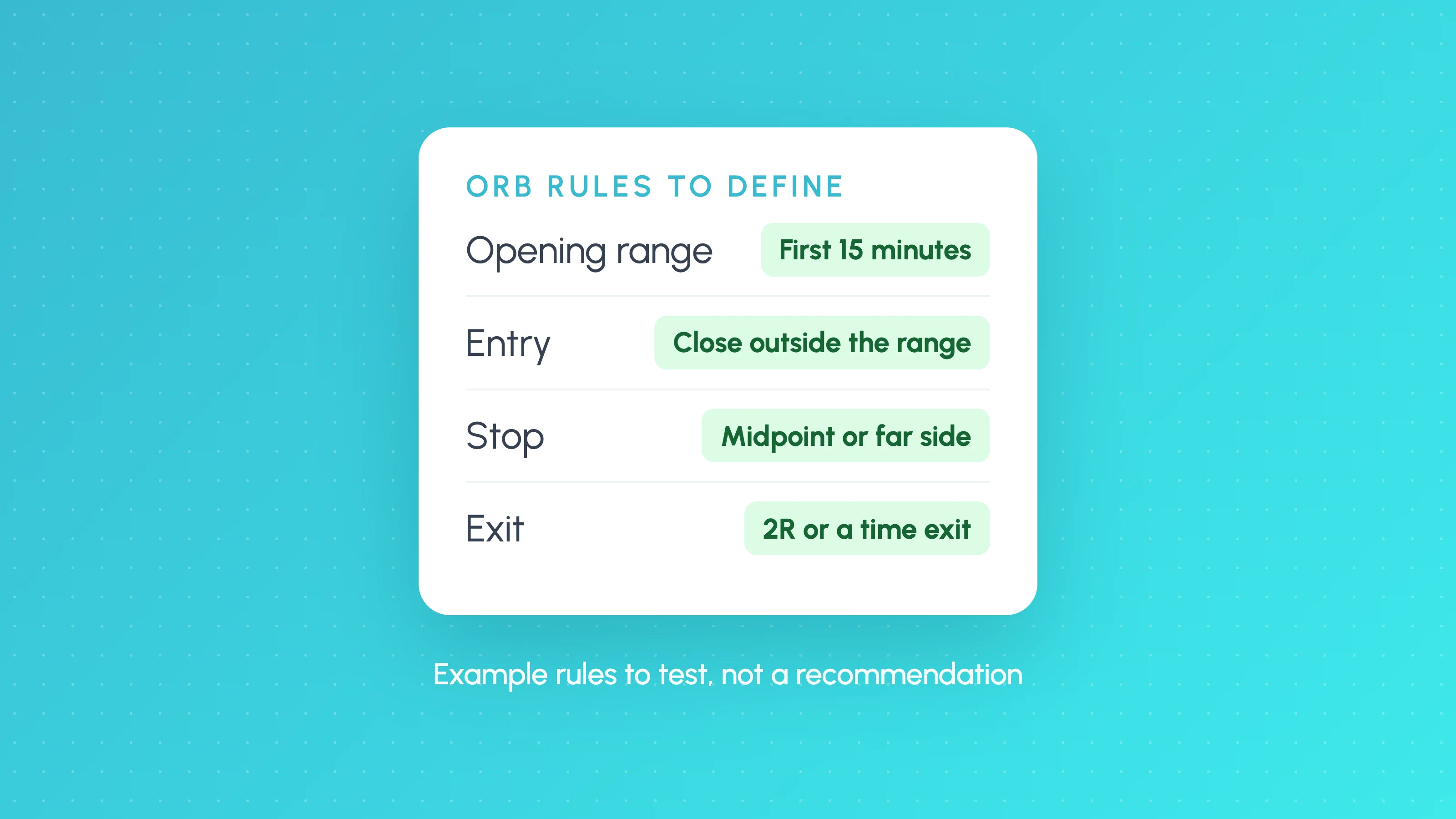
Opening Range Breakout Strategy: Rules, Variations and How to Test It
The opening range breakout (ORB) strategy explained: the 5, 15 and 30-minute range, entry, stop and target rules, the filters that cut false breakouts, and how to test it.
 Strategies
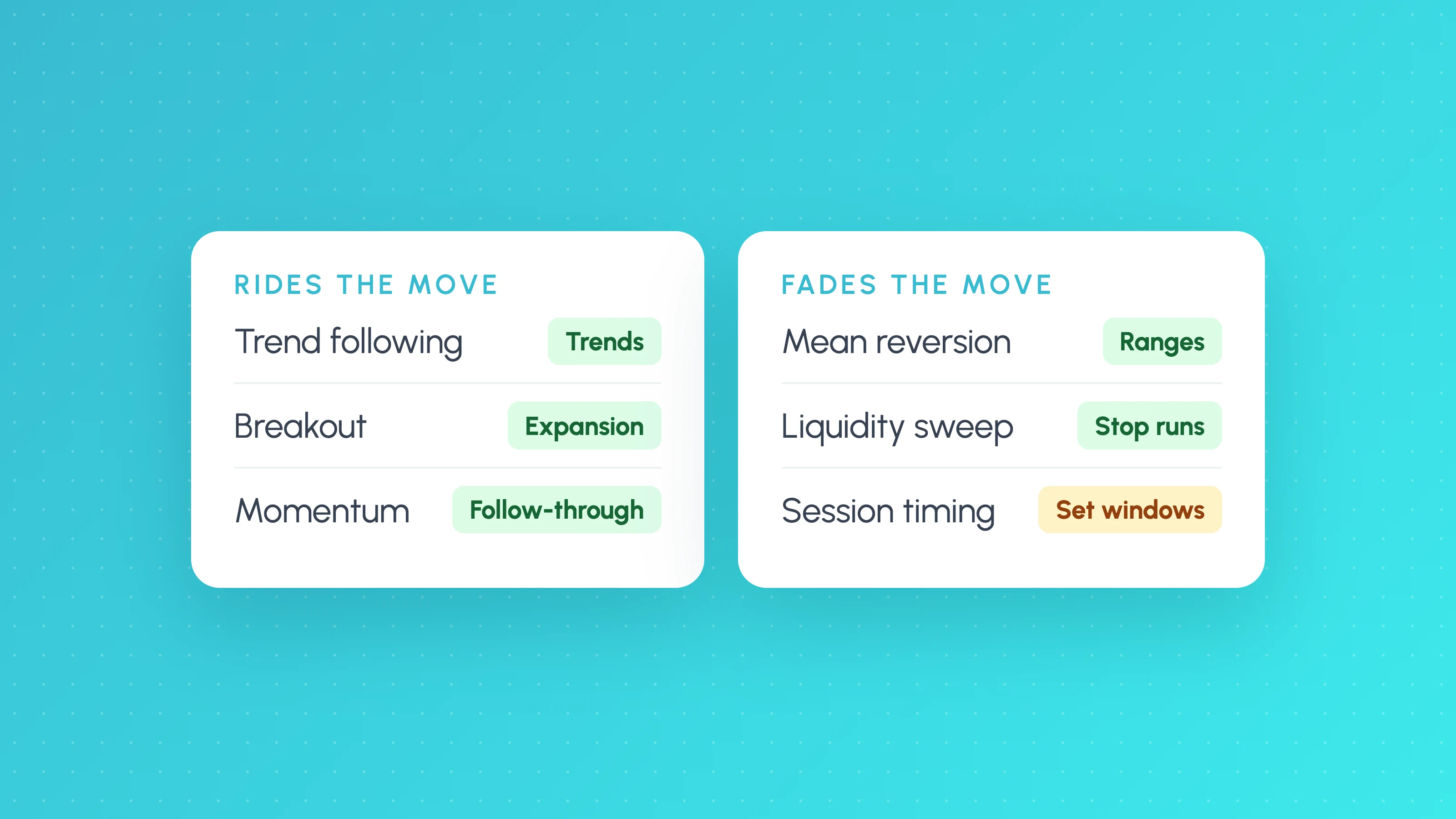
Algorithmic Trading Strategies: 6 Types Explained, With Rules You Can Test
The main algorithmic trading strategies retail traders use: trend following, mean reversion, breakouts, momentum, session and liquidity sweep strategies, with example rules.
 TradingView backtests
How to Analyse a TradingView Backtest by Session, Weekday and Hour
Analyse a TradingView backtest beyond the summary: split trades by session, weekday, hour, volatility and direction, check sample sizes, then test the rule.