

Which Brokers Let Claude or ChatGPT Trade for You? (November 2026 Tracker)
Which AI trading agent broker lets Claude or ChatGPT trade? As of November 2026, IBKR and Robinhood allow autonomous orders; Webull needs you to confirm each.
By Tessera Trades · Updated · 13 min read
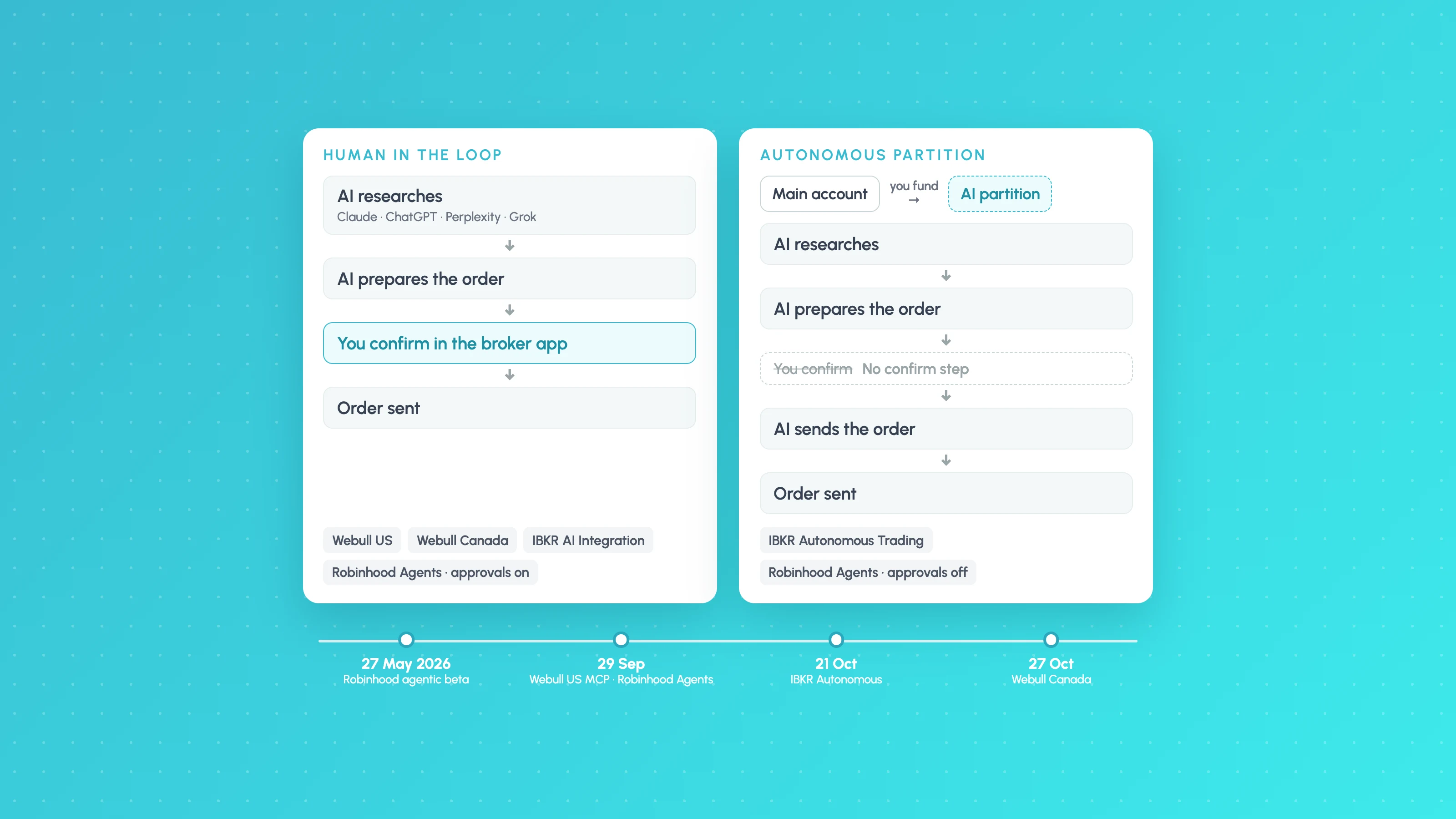
As of November 2026, Robinhood is the clearest case of a broker letting Claude or ChatGPT trade for you: its MCP connection lets external agents place orders in a dedicated Agentic account, and they can trade without per-order confirmation if you tell them to. Interactive Brokers' Autonomous Trading (announced 21 October 2026) lets "connected AI platforms" trade an AI Partition without approving each order, but does not say which platforms. Webull lets Claude, ChatGPT, Perplexity or Grok prepare orders, and nothing executes until you confirm it in Webull.
Most of these launched or changed between late September and late October 2026. The 3 November update adds TradeStation's MCP connection, Schwab's plans and the CFTC's first public questions about trading agents. This tracker puts them side by side, explains the two models brokers are using, who carries the losses when an agent gets it wrong, and how to judge an agent's results after its first month.
Risk note: trading with an AI agent can lose money, including all the capital you give it. Nothing here suggests any agent, broker or strategy will be profitable.
Tracker: brokers that let AI agents trade (as of 2026-11-03)
"Research" means the AI can read market data, balances and positions. "Prepare" means it can draft an order that you then submit. "Execute" means it can send the order itself.
| Broker / product | What the AI can do | Human confirms each order? | Instruments | Regions | Status | Source (date) |
|---|---|---|---|---|---|---|
| Interactive Brokers: Autonomous Trading | Execute within an "AI Partition" funded from your IBKR account. The release says "connected AI platforms" but does not name which ones | No. Orders are submitted "without requiring approval for each trade" | "Supported stock or equity-option orders" | Varies by IBKR entity and country of residence. Reportedly individual, non-margin accounts only, after 10 approved trades of $100+ in two weeks (QuantVPS) | Launched to eligible clients, with funding, account and eligibility limits | IBKR release via Business Wire (21 Oct 2026) |
| Interactive Brokers: AI Integration (MCP) | Research and prepare. Connects platforms such as ChatGPT, Claude, Grok and Perplexity to your account over MCP | Yes, it generates trading instructions "for review and approval" | Not listed separately in the release | Varies by IBKR entity and country | Live (described as existing in the 21 Oct release) | IBKR release via Business Wire (21 Oct 2026) |
| Robinhood Agents (Robinhood's own in-app agent, not Claude or ChatGPT) | Research, prepare and, if you switch trade approvals off, execute in a dedicated Agentic account | Yes by default ("Trade approvals are turned on by default"); you can turn them off | Equities, options and crypto | US | Rolling out; "not all customers have access" | Robinhood Agents overview (checked 2 Nov 2026) |
| Robinhood Agentic Trading (external agent over MCP) | Research and execute in a dedicated Agentic account. Clients listed include Claude Desktop, Claude Code, ChatGPT, Codex, Cursor and Grok | Not necessarily. You can review what the agent is about to do, but Robinhood warns that if you tell it not to ask, it can trade without your confirmation | Equities, options and crypto tools listed | US | Launched in beta on 27 May 2026 (TechCrunch), stocks only at first | Robinhood: onboarding an external agent (checked 2 Nov 2026) |
| Webull US: Cloud MCP | Research, view balances and positions, prepare orders. Claude, Perplexity and Grok; ChatGPT pending platform approval | Yes, every trade needs separate confirmation in Webull | Market data covers stocks, ETFs, options, futures, crypto and event contracts; tradable instruments not listed | US, eligible users | Launched 29 Sep 2026 | Webull release (29 Sep 2026) |
| Webull Canada: MCP | Research, view balances and positions, and draft orders in plain language. ChatGPT, Perplexity, Claude and Grok | Yes, "nothing is executed until the investor reviews and confirms the details on Webull" | Not stated for the AI feature; Webull Canada offers US and Canadian stocks, ETFs and options | Canada, eligible accounts | Rolling out; Webull expected it to reach all eligible accounts by the beginning of November 2026 | Webull Canada release via PR Newswire (27 Oct 2026) |
| TradeStation: MCP | Research and place orders over MCP. Claude and ChatGPT; other models "in development" | Yes, "no order reaches the market until you approve it" (StockBrokers.com) | Not listed in the sources | US; access requested through TradeStation's HUB | Live. StockBrokers.com reports that TradeStation told it in October it had dropped the $10,000 minimum balance and the paid Claude Pro or ChatGPT Plus requirement. TradeStation's own MCP product page still lists the $10,000 minimum, so treat that page as out of date | StockBrokers.com AI agent brokers guide (verified 2 Nov 2026) |
| Charles Schwab: planned MCP servers | Planned: check balances and do research, but not move money, according to StockBrokers.com, which quotes Schwab's CEO. Schwab says it is blocking outside AI agents that try to log in on clients' behalf | Not applicable yet | Not announced | US | Announced, no launch date | Family Wealth Report (30 Oct 2026), StockBrokers.com (2 Nov 2026) |
These products are changing month to month. Re-read the broker's own page before you fund an agent account, and assume eligibility, instruments and limits will differ by country and account type.
Reported, but not in the table
Two crypto exchanges have agent products we could not verify on their own pages. CNBC reported that Coinbase for Agents (11 June 2026) lets agents such as ChatGPT or Claude execute crypto trades. Cointelegraph reported that Binance Agent OS (20 August 2026) lets agents trade within user-set permissions, using dedicated sub-accounts. Check each exchange's documentation before relying on either.
What regulators are asking
US regulators have not set rules for trading agents yet, but they have started asking questions. At a CFTC forum on AI on 28 October 2026, Chairman Mike Selig asked whether the industry needs "know-your-agent", a version of know-your-customer checks for non-human traders, and raised two open questions: "Does the developer of that agent become subject to registration? Who's liable if the agent goes rogue?" (CoinDesk, 28 October 2026). This was discussion only. No rule has been proposed, and nothing has changed for brokers or users.
Brokers are also drawing their own lines. Schwab's CEO Rick Wurster said Schwab is blocking AI agents that try to log in to client accounts on clients' behalf, seeing such attempts "30, 40, 50 times" a week, according to Family Wealth Report (30 October 2026). The difference from the brokers in the tracker is the route: an agent using your password to act as you, rather than a connection the broker built and can limit.
Two models: human in the loop vs an autonomous partition
Almost every product above fits one of two designs.
Human in the loop. The AI reads your account and market data, drafts an order, and you press the button. Webull (US and Canada), TradeStation's MCP, IBKR's AI Integration and Robinhood Agents with approvals left on all work this way. The agent is effectively a research assistant that fills in an order ticket. You still decide every trade, so the main risks are a badly drafted order you approve without reading, or analysis built on stale or misread data.
Autonomous partition. You move a set amount of money into a separate account, write instructions in plain language, and the agent trades that money without asking you each time. IBKR's AI Partition, Robinhood Agents with approvals switched off and an external agent in a Robinhood Agentic account told not to ask all work this way. The partition caps how much the agent can lose to the money in it, but within that limit it can trade as often and as badly as its instructions allow.
The practical difference is who catches mistakes: in the first model you do, one order at a time; in the second, nobody does until you look at the account.
There is also a third, older route: writing your own bot against a broker API, often with an AI coding assistant. That is a different job, covered in Claude Code and OpenClaw trading bots. If you only want an AI to read charts rather than an account, see what the TradingView MCP server can and can't do.
Risks, and who is liable when the agent gets it wrong
The short answer from the brokers' own wording is: you are.
- Robinhood says in its Agents overview that "You are responsible for your agent's actions", and its external agent page says the same for agents connected over MCP. It says you assume all risk for trades executed by AI agents, and that it does not control, supervise, monitor or audit agents. It also warns that AI-driven strategies can move quickly and be difficult to monitor or stop in real time.
- Webull Canada's release says Webull assumes no liability for losses or errors from automated, client-scripted or agent-generated orders, and warns that agents may misread prompts, act on delayed data or behave unpredictably.
- Interactive Brokers' release says the AI works from client-defined instructions, subject to account restrictions and safeguards, but does not set out liability. Read the account terms for the AI Partition before you fund it.
The risks that follow from this are specific:
- Misread instructions. "Trim oversized positions" or "buy the dip" can be interpreted in ways you did not intend, and in an autonomous partition the order goes out before you see it.
- Stale or wrong data. The model may reason from delayed quotes, an old news item or a hallucinated figure.
- Overtrading. An agent that checks the market every few minutes can rack up commissions, spreads and slippage that a human would never pay.
- Model changes. The LLM behind the agent is run by a third party and can be updated, which can change behaviour with no change to your instructions.
- Data sharing. Robinhood notes you assume risk for how third-party LLM providers use your data. Check what the AI provider stores.
None of the brokers claims its agent will make money, and public evidence on LLM trading so far is not encouraging: see do AI trading bots actually work? for what live experiments have found.
What to check before you give an agent money
Run through this list for any broker in the tracker:
- Which model are you on? Confirm whether each order needs your approval, and whether that is the default or a setting someone can switch off.
- How is the money ring-fenced? Is there a separate partition or agentic account, and can the agent see or touch your other accounts? Robinhood says its agent can view your other Robinhood accounts but only trade in its dedicated Agentic account.
- What can it trade? Check which instruments and order types the agent can use, and whether margin is involved.
- What limits exist, and who sets them? Position size, number of trades, maximum loss. If the broker does not enforce one you need, the agent will not either.
- How do you stop it? Find the pause or disconnect control before you need it.
- Where do the trade records go? You will need a full history with timestamps, prices, fees and quantities to judge the agent later. Check now that you can download it.
- Have you written the instructions down? Save the exact prompt with a date, so you can later tell misreading from doing what you asked.
Start with an amount you can afford to lose entirely. A month of live trading is a test, not a track record.
How to judge an agent's results after a month
A month of results tells you less than it seems. Check these four things.
1. Compare it with doing nothing
Set the agent's return against simply holding what it traded, or a broad index, over the same dates. An agent that made 3% while the stocks it traded rose 6% did worse than buy-and-hold, however busy it looked.
2. Count the trades before you trust the numbers
Twenty trades is not enough to separate skill from luck. Win rate and profit factor on a small sample can swing widely from one month to the next. How many trades you need for a valid backtest explains the arithmetic, and it applies equally to a live agent. If the agent trades rarely, a month may simply be too short to judge.
3. Subtract the real costs and look at turnover
Use net figures after commission, spread, slippage and any token or usage fees you pay to run the agent; Robinhood, for example, bills agent chat from a separate prepaid token balance. Then look at turnover: how many times the agent traded through the account's value. High turnover with a thin average trade often means costs are doing the damage.
4. Break results down by condition
An overall figure hides where the agent loses money. Split its trades by session, time of day, weekday, volatility, symbol and long versus short. A common pattern is an agent that does acceptably in one session and gives it back in another. Treat thin buckets as hints, not conclusions. The same checks are laid out step by step in how to test a trading strategy ChatGPT or Claude wrote.
Doing this with Tessera
Tessera does not run AI agents. Its own trading bot, Launchpad, only runs Strategy Lab strategies on paper or on cTrader and Liquid Brokers accounts, so for an agent at the brokers above, Tessera's part is analysing the trades it has already taken. If your agent trades at Interactive Brokers, Tessera can live-sync the account through IBKR's Flex Web Service or import a Flex Trades CSV, and Binance Spot accounts also live-sync. Robinhood and Webull have no native Tessera connection, so you would need to export the trade history to a spreadsheet and load it with the Custom CSV importer. The Entry Analysis report then shows which sessions, times, weekdays, volatility conditions and symbols cost the agent money.
Whoever places the trades, you still have to judge the results: run the free Entry Analysis report on your agent's first month. No card is needed.
Frequently asked questions
- Can Claude or ChatGPT trade stocks for me?
- Yes, through some brokers, as of November 2026. Robinhood lets external agents including Claude and ChatGPT trade over MCP in a dedicated Agentic account, and they can do so without per-order confirmation. Interactive Brokers' Autonomous Trading lets "connected AI platforms" trade an AI Partition without approving each order, but does not name which platforms. Webull lets Claude, ChatGPT and others prepare orders that you must confirm.
- Which broker lets an AI agent trade without my approval?
- As of November 2026, Interactive Brokers' Autonomous Trading lets a connected AI submit supported stock and equity-option orders from an AI Partition without approval for each trade, for eligible clients. At Robinhood, an external MCP agent can trade without confirmation if told to, and Robinhood's own in-app agent can once you turn approvals off. Webull requires your confirmation for every order.
- Does Webull work with Claude?
- Yes. Webull's Cloud MCP connects Claude, Perplexity and Grok to eligible US accounts, with ChatGPT pending approval, and Webull Canada added ChatGPT, Perplexity, Claude and Grok on 27 October 2026. In both cases the AI can research and prepare orders, but each trade needs your separate confirmation in Webull.
- Does TradeStation let Claude or ChatGPT trade?
- Yes, with your approval. TradeStation's MCP connection lets Claude and ChatGPT research and place orders, but no order reaches the market until you approve it. StockBrokers.com reported on 2 November 2026 that TradeStation has dropped its $10,000 minimum balance for MCP access, although TradeStation's own product page still lists it. Access is requested through TradeStation's HUB.
- Is the CFTC regulating AI trading agents?
- Not yet. At a forum on 28 October 2026, CFTC Chairman Mike Selig asked whether a "know-your-agent" check is needed and whether developers of trading agents should have to register, but these were open questions. No rule has been proposed.
- Is Robinhood agentic trading available to everyone?
- Not yet. As of 2 November 2026, Robinhood's help page says Robinhood Agents "is still rolling out" and not all customers have access. The separate external-agent Agentic Trading over MCP launched in beta in May 2026 for US customers.
- Who is responsible if an AI agent loses my money?
- You are, according to the brokers' own wording. Robinhood says you are responsible for your agent's actions and that it does not supervise or audit agents, and Webull says it assumes no liability for agent-generated orders. Read your broker's terms before funding an agent account.
- How do I know if my AI trading agent is any good?
- Compare its net return with buy-and-hold over the same dates, check you have enough trades for the numbers to mean anything, subtract all costs including usage fees, and break results down by session, volatility and symbol. A single good or bad month is weak evidence either way.
Keep reading
 AI and Pine Script
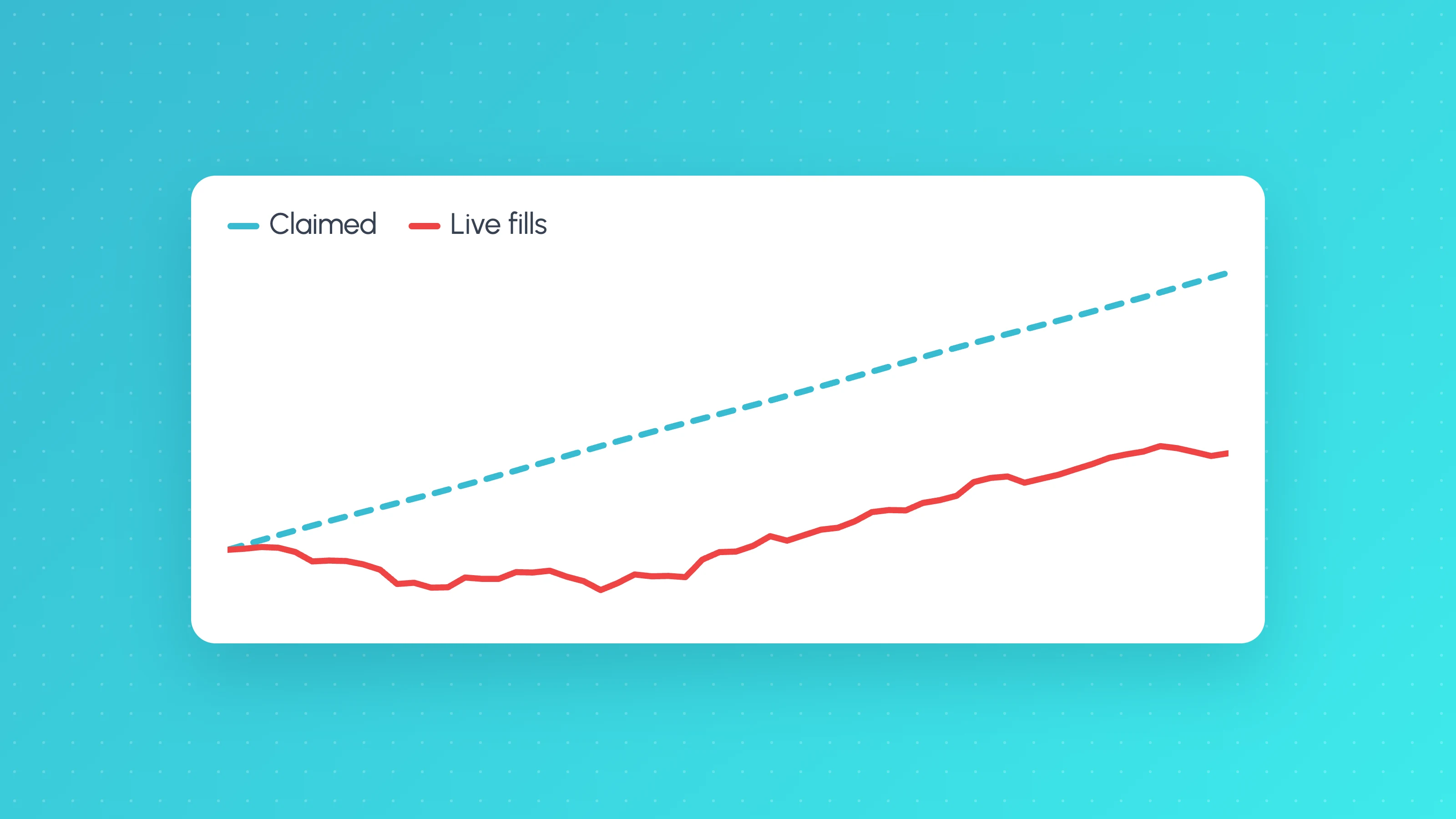
Do AI Trading Bots Actually Work? What the Live Results Show (2026)
Do AI trading bots work? In public live tests most lost money, and regulators warn about AI bot scams. See the evidence and how to judge any bot's record.
 AI and Pine Script
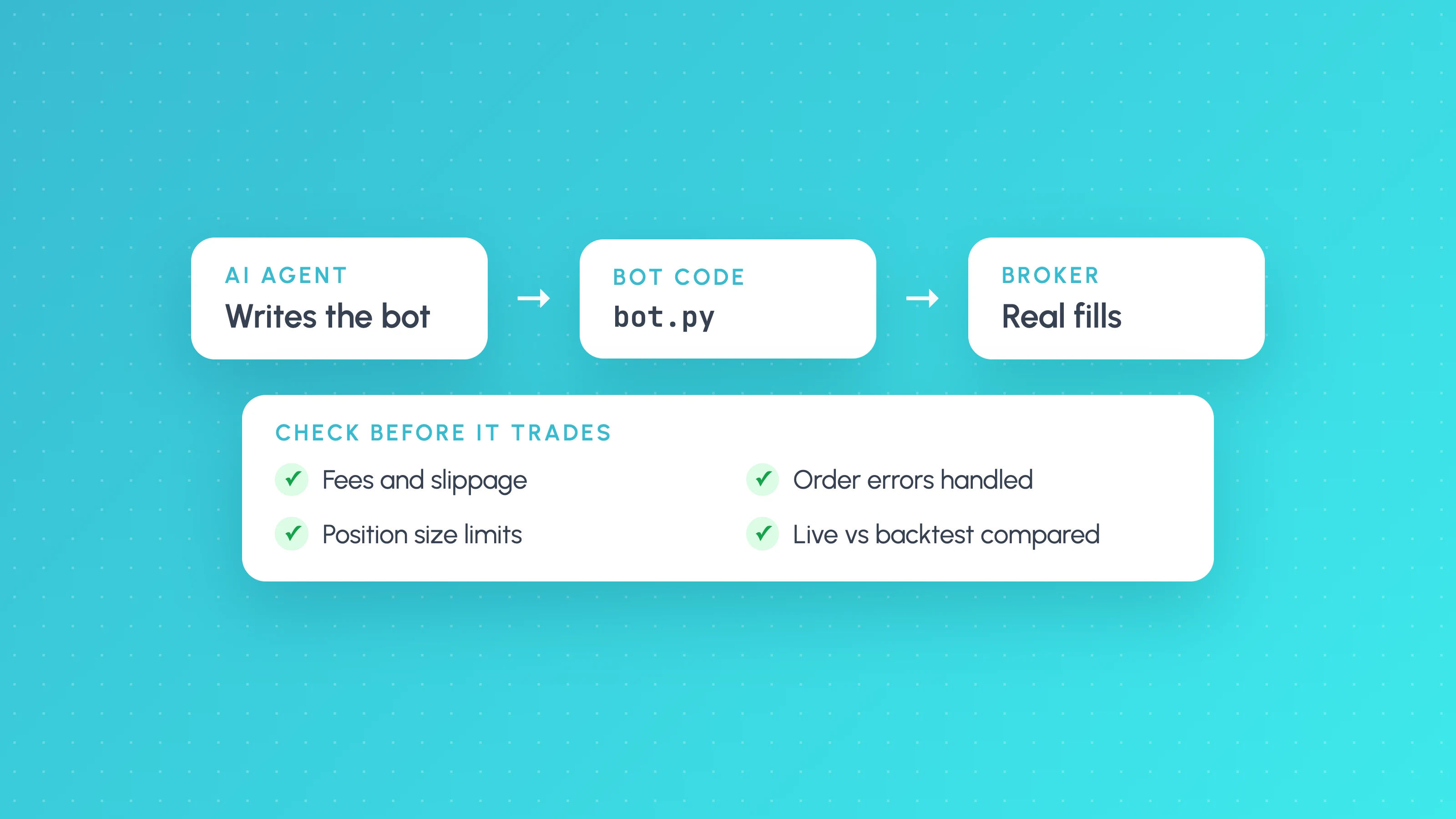
Claude Code and OpenClaw Trading Bots: What the Tutorials Leave Out (and How to Check Yours)
Claude Code can often build a trading bot in an afternoon, but it can't tell you if it has an edge. What tutorials skip, and how to check yours.
 TradingView backtests
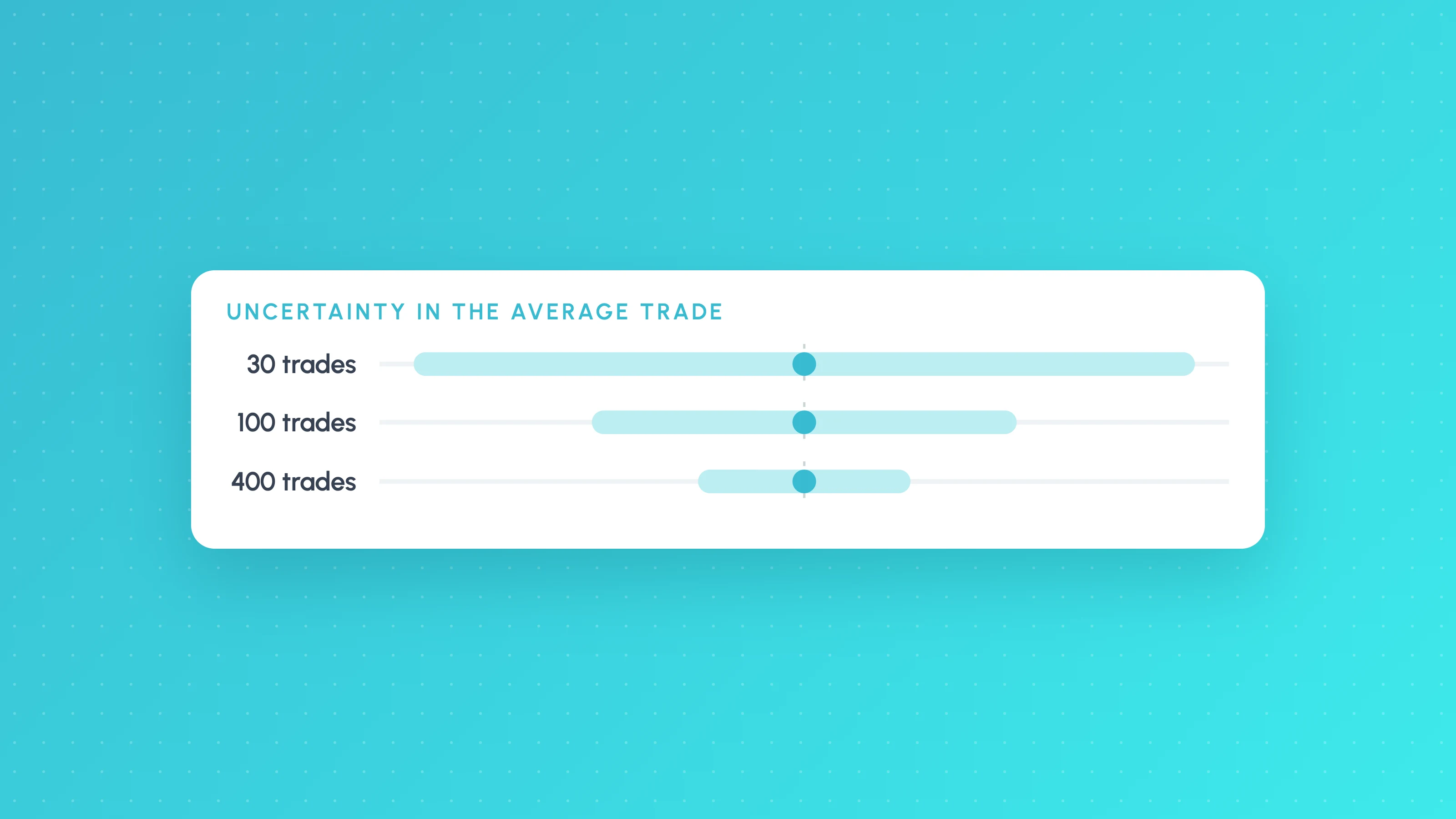
How Many Trades Do You Need for a Valid Backtest?
How many trades a backtest needs: rules of thumb, the t-statistic formula with a worked example, a table by edge size, per-bucket minimums and multiple testing.